
Deep Roots Hold Strong at La Tierra del Jaguar
October 9, 2026
There are organizations that work to protect nature, and then there are organizations that understand that protecting nature ultimately means healing our relationship with it. La Tierra del Jaguar is the latter. Working along the Río Sahuaripa in the foothills of the Sierra Madre Occidental in Sonora, Mexico, La Tierra del Jaguar brings together ecosystem restoration, regenerative agriculture, environmental education, wildlife conservation, and opportunities for local people to participate in and benefit from caring for their landscapes.

What I admire about La Tierra del Jaguar’s work is that they look beyond the symptoms of environmental degradation and species loss and toward the roots of the problem: how we live on the land, how we make a living from it, how we relate to the wild species around us, and how we build communities that can thrive without further degrading the ecosystems that sustain them.

From day one, La Tierra del Jaguar’s goal was never to seek the spotlight of regional conservation. It was to meaningfully involve community members in their work. To build something rooted in the people, relationships, and realities of the landscape. They have chosen the slower, harder work of building trust, creating opportunities, and making conservation something that belongs to the community, not something simply brought into it or imposed. La Tierra del Jaguar’s founder, Randy Young, once told me: “There’s no way around working to better people’s livelihoods. If they don’t care about the bees that pollinate their crops, they won’t care about the jaguars.”

I think that captures something fundamental about conservation. You can’t ask people to care deeply about a species or an ecosystem while ignoring the realities of their own lives. Caring for nature has to make sense to the people who live there. It has to create reasons to care, opportunities to participate, and a sense that a healthy landscape is part of their own future. That is important to me because I believe the most durable conservation work is not about asking people to care about an abstract idea of biodiversity. It is about helping people find meaning, opportunity, pride, and a sense of responsibility in the places they call home. It is about making conservation relevant to everyday life, and building something that can continue beyond a grant, project, or any one organization.

That is one of the reasons I wholeheartedly believe in La Tierra del Jaguar. I can tell that they genuinely care. Not just about conservation as an idea, but about the people and the place at the heart of their work. And that kind of care matters because sustainable change cannot be created from a distance or from a desk alone. It requires being willing to get close, to listen, to learn, and to understand the needs of the people who know and care for a place. It requires patience and the willingness to build trust long before there is anything obvious to show for it.

That is also why I believe this kind of work deserves to be supported. It takes time, and some of its most important outcomes are difficult to capture in a spreadsheet. Acres restored, trees planted, species documented, landowners engaged, workshops held — those things do matter. But so do trust, belonging, commitment, a person deciding that the land they manage is worth caring for, and a community seeing a conservation project as something that is theirs. Those things can take years to build and may be impossible to fully capture in metrics.

Hurricane Polo destroyed years of work and infrastructure, but it did not destroy the relationships that La Tierra del Jaguar had built over those years. The strength of those relationships was reflected almost immediately, when community members came together to help. To me, this is what conservation success looks like. La Tierra del Jaguar has accomplished a great deal, but there is perhaps no better measure of that success than what happened when everything they had built was suddenly damaged: The people showed up. They showed up because they cared about the work, because they felt connected to it, and because it had become a genuine part of their community.

That response is not something you can manufacture after a disaster. You cannot build it with a communications strategy or a project proposal. It is the result of years of listening, working side by side, creating opportunities, and earning trust. It is what happens when conservation becomes part of the fabric of a place. What makes La Tierra del Jaguar unique is not any individual program or piece of infrastructure. It is the sense of connection they have built around their work. That is something much harder to destroy, and something worth investing in.

Supporting La Tierra del Jaguar right now is about more than replacing equipment or replanting fields. It is about helping a community rebuild something that has already proven its value. It is about protecting the relationships, knowledge, and momentum that existed before the storm and making sure these can continue. That is the kind of conservation I believe in. Not simply conservation that protects a perimeter, or changes colors on a map, but conservation that builds relationships that endure when things go wrong — relationships where people show up for one another when needed most. I think that tells us something important: La Tierra del Jaguar’s approach is working.
If this community building is the kind of conservation you believe in too, I hope you will join me in supporting La Tierra del Jaguar as they rebuild. Please visit La Tierra’s del Jaguar’s fundraising page to contribute and learn more.

Photo of the Río Sahuaripa at normal flows by Alex Lucero, all other photos courtesy La Tierra del Jaguar.
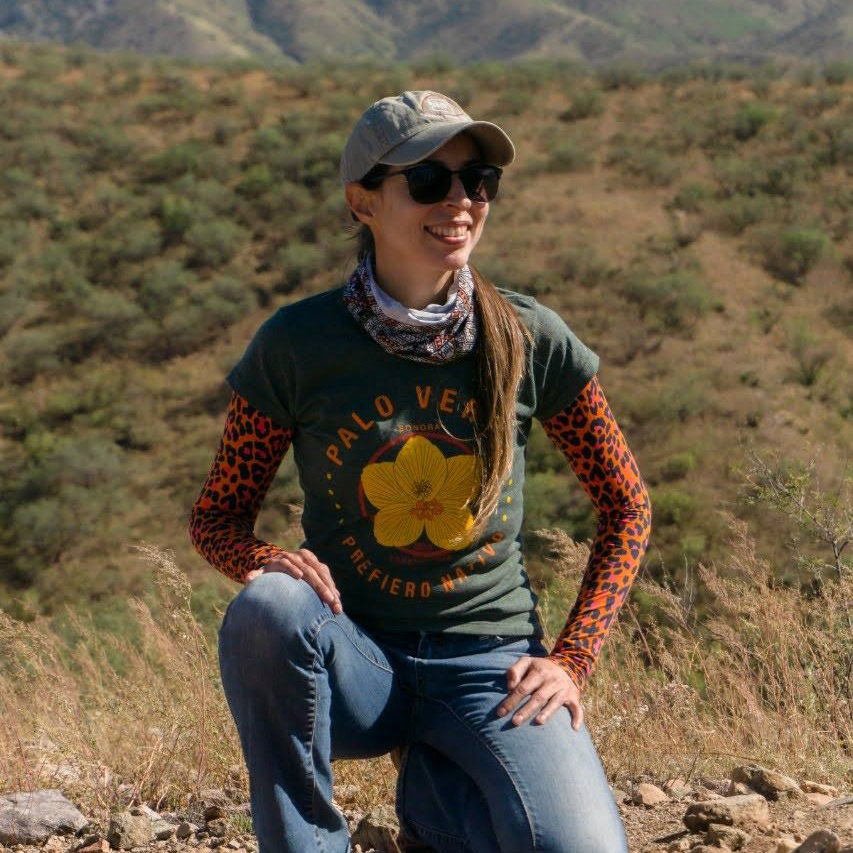
Mirna is a biologist from the University of Sonora, with more than a decade of experience in the U.S.-Mexico borderlands. She serves on the board of directors of La Tierra del Jaguar and is Rewilding Institute’s jaguar program coordinator.