
Rewilding Our Waterways: Don’t Forget the Fish
November 6, 2025

Native cutthroat trout (Photo by The American Southwest and Freshwater Illustrated)
While much of rewilding focuses on terrestrial landscapes, our lakes, ponds, rivers, and streams have been equally compromised. Water pollution, dams, culverts, bridges, riprap, cattle- and ORV-beaten banks, damaged riparian areas, and other human-related intrusions are easy to see and address. Unfortunately, fish are not easy to see, which often leaves them unaddressed.

Rainbow/cutthroat hybrid from Slough Creek in Yellowstone National Park (Photo by Diana Mallard)
Development, pollution, habitat degradation, overfishing, stocking, and a changing climate resulting in increased droughts, floods, and wildfires have contributed to the loss of native fish across the United States. However, nothing has done more harm to native fish than non-native fish introductions. This is especially true with regard to salmonids, where non-native fish are now the rule not the exception.
Rainbow trout, a species that is native west of the Continental Divide, are the most moved around fish in the country. They were first raised in captivity in 1870 in California. By 1875, non-native rainbow trout were shipped east to New York. The following year, they were shipped to Michigan. Brown trout, a species native to Europe, were brought into the United States in 1883. The first introduction occurred on the Baldwin River in Michigan in 1884.
The proliferation of non-native salmonids is the result of the flawed belief that trout should be unlimited. And that non-native trout provide better “sport” than native trout. In the East, fisheries managers and anglers embrace non-native rainbow trout, brown trout, landlocked salmon, steelhead, and Pacific salmon over native brook trout, lake trout, Arctic charr, and Atlantic salmon. Out West it’s non-native brown trout, rainbow trout east of the Continental Divide, and landlocked sockeye salmon over native cutthroat, bull trout, and grayling.

Yellowstone cutthroat from the Washakie Wilderness in Wyoming (Photo by Diana Mallard)
Many waters in the nation’s wild areas are home to self-sustaining populations of non-native fish. This includes Yellowstone National Park and the Greater Yellowstone Ecosystem, where non-native brown trout, rainbow trout, lake trout, and adfluvial grayling have been introduced. And many of the waters in the national park that are now home to self-sustaining populations of fish were historically fishless, including sprawling Lewis and Shoshone Lakes, and most high-elevation ponds. Even the heralded golden trout of the Wind River Range are non-native.
The mid-1980s introduction of non-native lake trout into Yellowstone Lake, likely the result of a deliberate act by anglers who wanted to fish for them, has imperiled the most significant population of native Yellowstone cutthroat. Before that, it was federal fisheries managers who introduced non-native lake trout, and brown trout, into nearby Lewis and Shoshone Lakes in the late 1800s.
In the Southwest, rare and at-risk native Apache trout and Gila trout must compete with non-native brown trout and rainbow trout as a result of ill-advised, government-sponsored stockings. The situation is not much better in the East where rare, native Arctic charr have been lost after the introduction of non-native lake trout, landlocked salmon, and smelt. In the Great Lakes region, geographically isolated, fluvial Arctic grayling have been extirpated as a result of non-native brown trout and rainbow trout introductions.
Warm-water fish haven’t escaped the plague of non-native fish. Unique, native redeye bass and shoal bass in the Southeast are being lost to non-native bass due to competition for food and space and hybridization. And throughout the Northeast, native brook trout and federally endangered, native Atlantic salmon have been compromised and lost to non-native bass and, more recently, non-native pike.

Rare Maine arctic charr (Photo by Bob Mallard)
Stocking in support of angling is another problem. Things have gotten so out of hand that we now stock trout in waters where their life expectancy is measured in mere weeks due to thermal stress. Maine, a native fish-rich state and the last stronghold in the U.S. for sea-run brook trout, lake and pond brook trout, Arctic charr, and Atlantic salmon, now boasts “Fish Stocking Report Now Available with Daily Updates” on the official state fish and game website.
There are hundreds of fish hatcheries run by state and federal fish and game agencies, Native American Tribes, and private clubs and businesses. These fish are stocked in public waters in support of angling. Many fish are aerially planted in wilderness areas such as New Hampshire’s White Mountain National Forest, Baxter State Park in Maine, and Maine’s 100-Mile Wilderness. Washington State alone stocked more than 14 million trout in 2024.
Hatchery-raised fish can introduce parasites, viruses, bacteria, and funguses – like whirling disease, viral hemorrhagic septicemia (VHS), vibriosis, and saprolegnia ferax – resulting from confinement, crowding, poor water quality, and thermal stress. Stocked fish can also reduce genetic diversity and disrupt spawning in wild native fish populations.

A stocked brook trout from White Mountain National Forest in New Hampshire. Note the receding gill plate and ragged tail. (Photo by Diana Mallard)
Anglers, the fishing media, and the fishing industry often turn a blind eye to non-native fish or, worse, defend them. Would hunters and other outdoor enthusiasts accept and defend native elk, deer, and pronghorn being displaced by European red deer, Persian fallow deer, and African antelope? While the analogy may sound extreme, the impact on native ungulates would be similar to that of non-native fish on native fish.
Many conservation groups ignore non-native fish. While they bemoan the presence of non-native plants, insects, reptiles, amphibians, crustaceans, birds, and mammals, they are oddly silent when it comes to non-native fish. I once saw a group removing non-native frogs from a river where the native fish had been replaced with non-native trout. In another case, a group works to control non-native milfoil in a lake full of non-native bass and pike.
When general conservation groups talk about fish, it is often inaccurate. One group refers to non-native “large mouth” bass as “native stock”—which is not only wrong but an incorrect spelling, showing their depth of fish illiteracy. They go on to say, “You should thank the [non-native] bluegills because they help limit the insect population.” While declaring war on non-native koi, they tout non-native trout stocking, including highlighting it on a pond-side kiosk right above “NATIVE PLANTS FOR BIODIVERSITY.”

A nonnative brown trout from the Lewis River in Yellowstone National Park. (Photo by Diana Mallard)
When an area is targeted for rewilding, the proposal should include a plan to suspend stocking, remove non-native fish, and restore native fish to the highest degree possible. Otherwise, the effort will fall short of true and complete restoration. Unfortunately, removing non-native fish is not always ecologically possible. It is also not palatable to some within the conservation community, since it often involves chemical reclamation and mechanical intrusion into wilderness areas.
While rewilding aquatic ecosystems should include the removal of non-native fish, it should not include introducing fish into historically fish-less waters as was proposed in regard to Buffalo Creek in the Absaroka-Beartooth Wilderness. Removing what is non-native to the stream and area, then introducing something that is native to the area but not the stream, is biologically unsound and the wrong message.

Brook trout from Great Smoky Mountains National Park in Tennessee (Photo by Diana Mallard)
To call the proliferation of non-native fish an epidemic would be accurate. To say that non-native fish are, always have been, and likely always will be the number one threat to native fish would be fair. We have lost many native fish populations to non-native fish introductions and continue to do so. While it has slowed down in some areas, in places like Montana, Wyoming, and Maine, it seems to be increasing.
Native fish play a critically important role in our ecosystems. Non-native fish disrupt the natural order, impacting native fish as well as insects, crustaceans, amphibians, reptiles, birds, and mammals. While we continue to improve aquatic and riparian habitat, we often fail to address what should and shouldn’t live there. This needs to change, and that is what groups like Native Fish Coalition are trying to do.
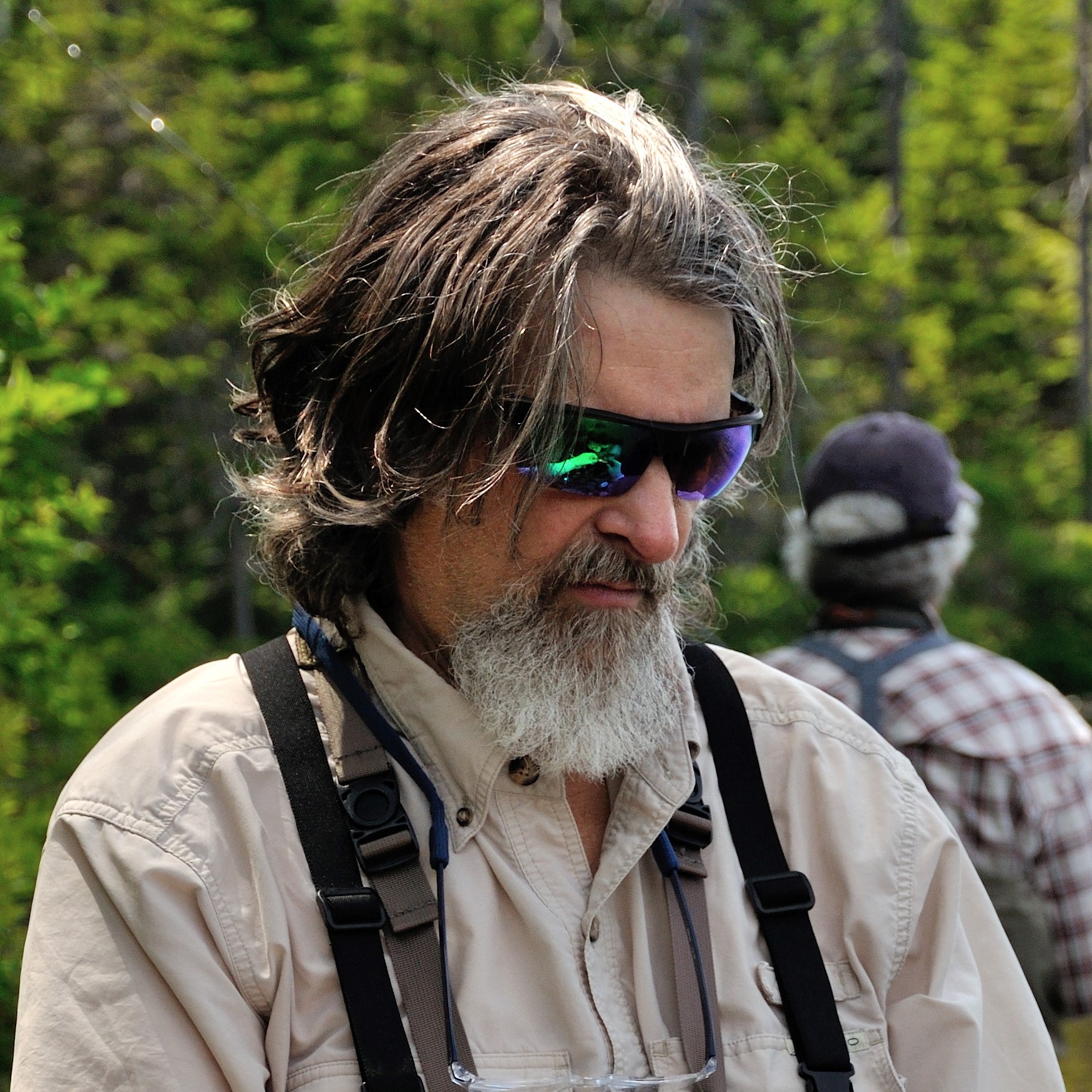
Bob Mallard is a founding member and executive director of Native Fish Coalition. He is a former fly shop owner and registered Maine fishing guide. Bob has written five books and hundreds of articles on fly fishing, fisheries management, and native fish conservation. He can be reached at www.NativeFishCoalition.org or Info@NativeFishCoalition.org.