
Fishing for Piranha, Finding Joy with Giant Otters
July 18, 2025
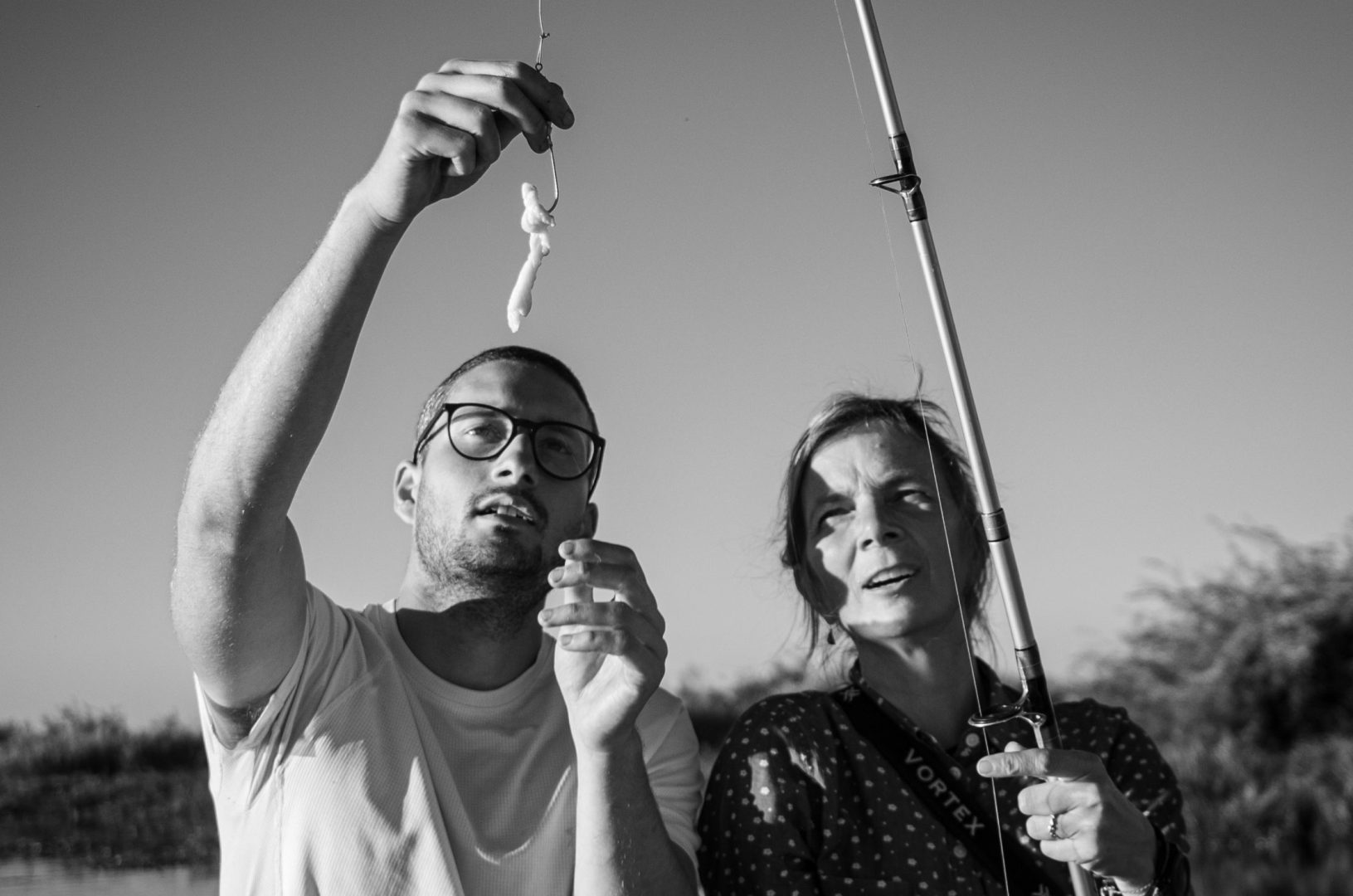
On our last night at Iberá National Park in northern Argentina, we went out in a boat at sunset to fish for piranha. As part of our fishing lesson, Bauti instructed that if we wanted to rinse our hands in the water after handling the chicken we were using as bait, to do it quick. There were piranha, known locally as palometas, everywhere. We had pulled into a cove where a handful of yacaré (caiman) were swimming nearby. Having grown accustomed to seeing these alligator-like reptiles by this point, we cast our lines trying to avoid them as if this was something we do every day back home in the Sonoran Desert.
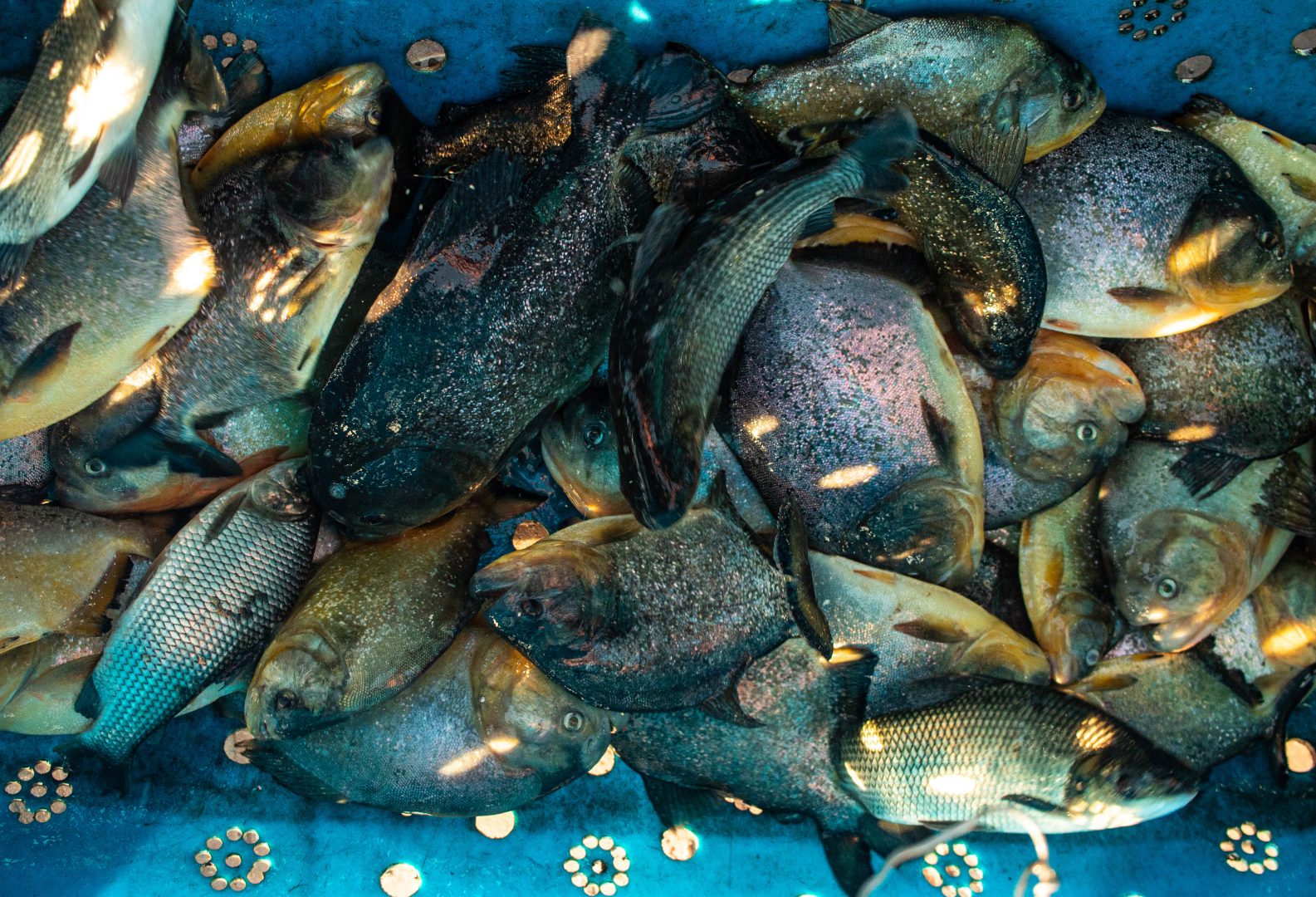
The fishing was easy. Within minutes, two dozen razor-toothed palometas were in a bucket of water that was placed between us on the boat. Our energy was electric because we knew how elated the recipients would be. Once we spent time with giant otters, we wanted to do anything for them – which included fishing for piranha to provide their next meal.

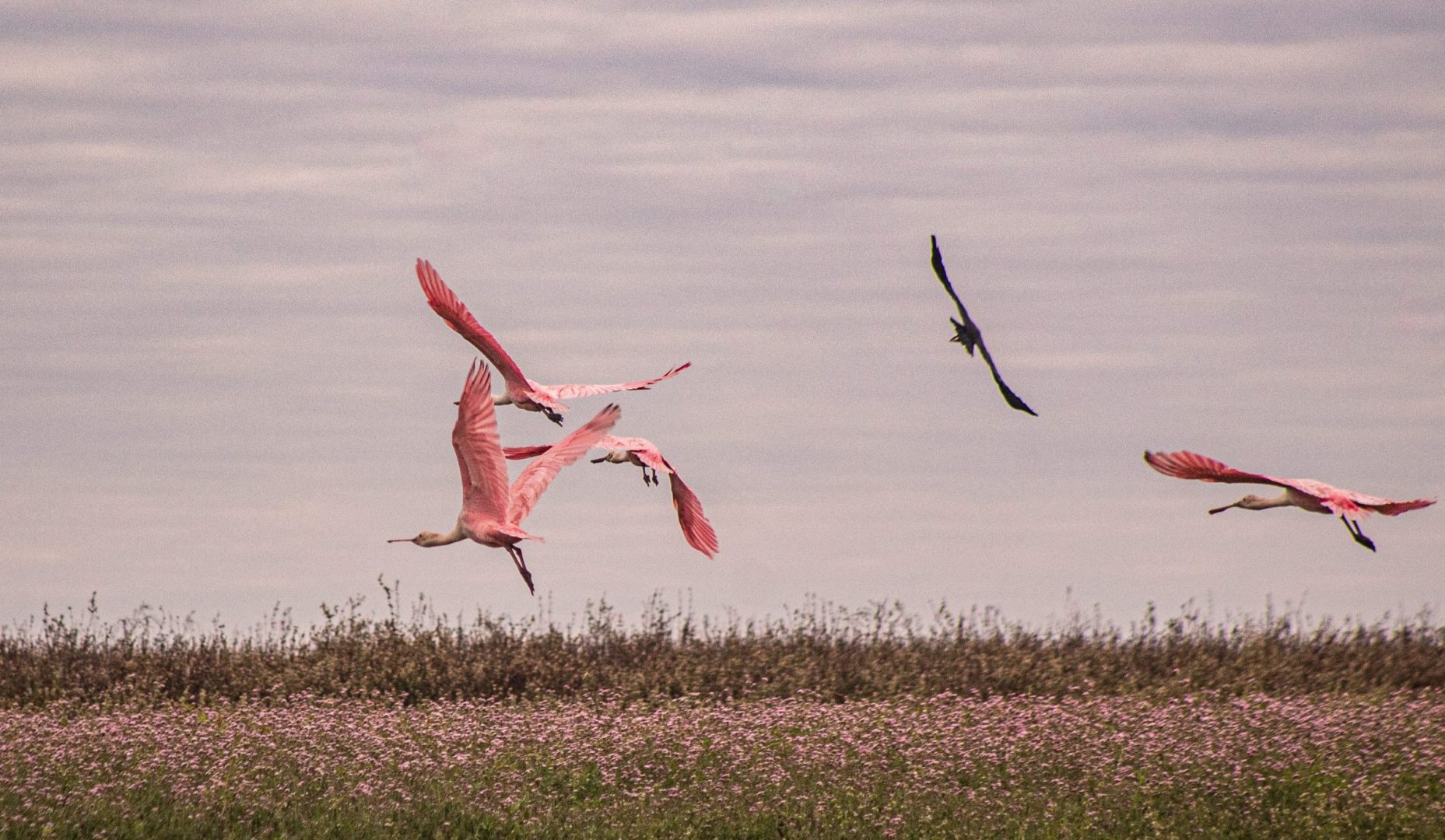
Before we arrived at Iberá, a protected area of two million acres in Corrientes Province, friends and colleagues said we would see the most spectacular sunsets. That it is like Disneyland with capybara families wading in and out of the water, islands replete with sun-bathing caimans, and an abundance of wildlife watching in every moment. Being in Iberá felt like we were in a field guide that had come to life. In real time, we were flipping through the pages of a guidebook and checking off every single bird species as seen: roseate spoonbills, white-faced ibis, ringed kingfishers, stilts, storks, caracaras, herons, the strange-tailed tyrant.
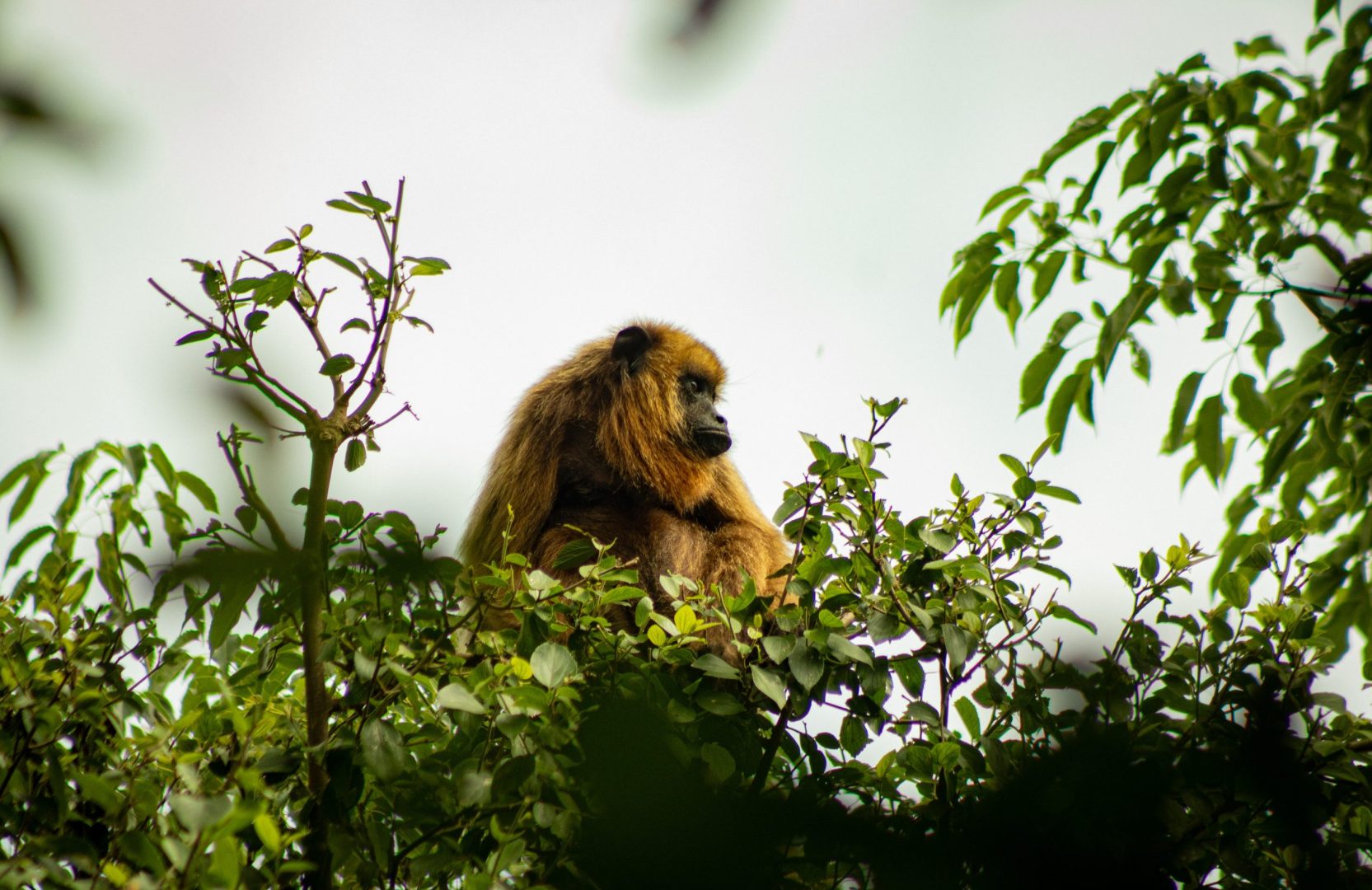
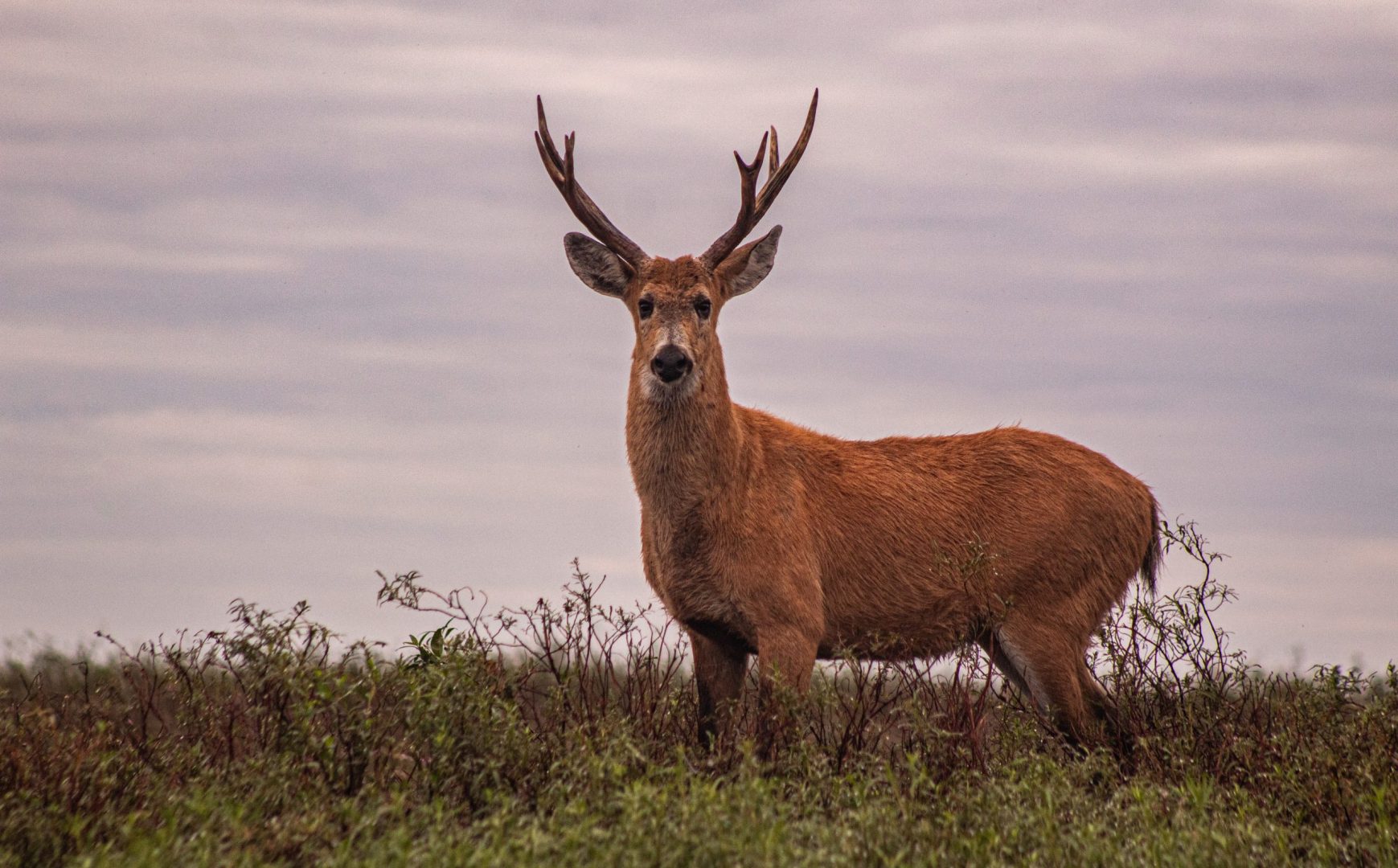
Water is the outstanding element of Iberá. We found ourselves immersed in blue-and-green ribbons of rivers, lagoons, and wetlands that appear to extend forever as they blend with a sea of grassland and pockets of forest dotting the horizon. The contrast from the Sky Islands of the U.S.-Mexico borderlands – and that this is also jaguar habitat – made us sometimes feel wobbly, like we had lost our center of gravity. The javelina, tarantulas, and scorpions felt familiar; the howler monkeys and the black stocking-wearing marsh deer could have been another world. A walk through the forest revealed anteater claw marks carved into tree trunks. The jaguars and otters were similar but giant versions of the ones we know.
Rewilding Argentina is bringing back the missing, extirpated species of this landscape. Because species’ decline and disappearance create imbalance, they are returning native fauna to re-establish complete, vibrant ecosystems where all components are present in sufficient numbers. Their work in Iberá began two decades ago, and it includes emblematic and threatened species that locally carry scientific, cultural, economic, educational, and spiritual importance.
We traveled to South America to knock on the door of these giants in the rewilding movement and learn everything we could. We knew that seeing how Rewilding Argentina addresses the consequences of species loss, how they repair the damage, would show us what is possible where we live. Hope is a word often used to describe rewilding, and it is a feeling that became more tangible with each day at Iberá. Being there made us want to move beyond the conversations, planning, and studies that can sometimes go on too long and paralyze conservation. Being there showed us how important it is to take a big vision, break it down into actionable steps, and begin. Iberá provided a reminder and example of how to protect and restore life where it once existed.
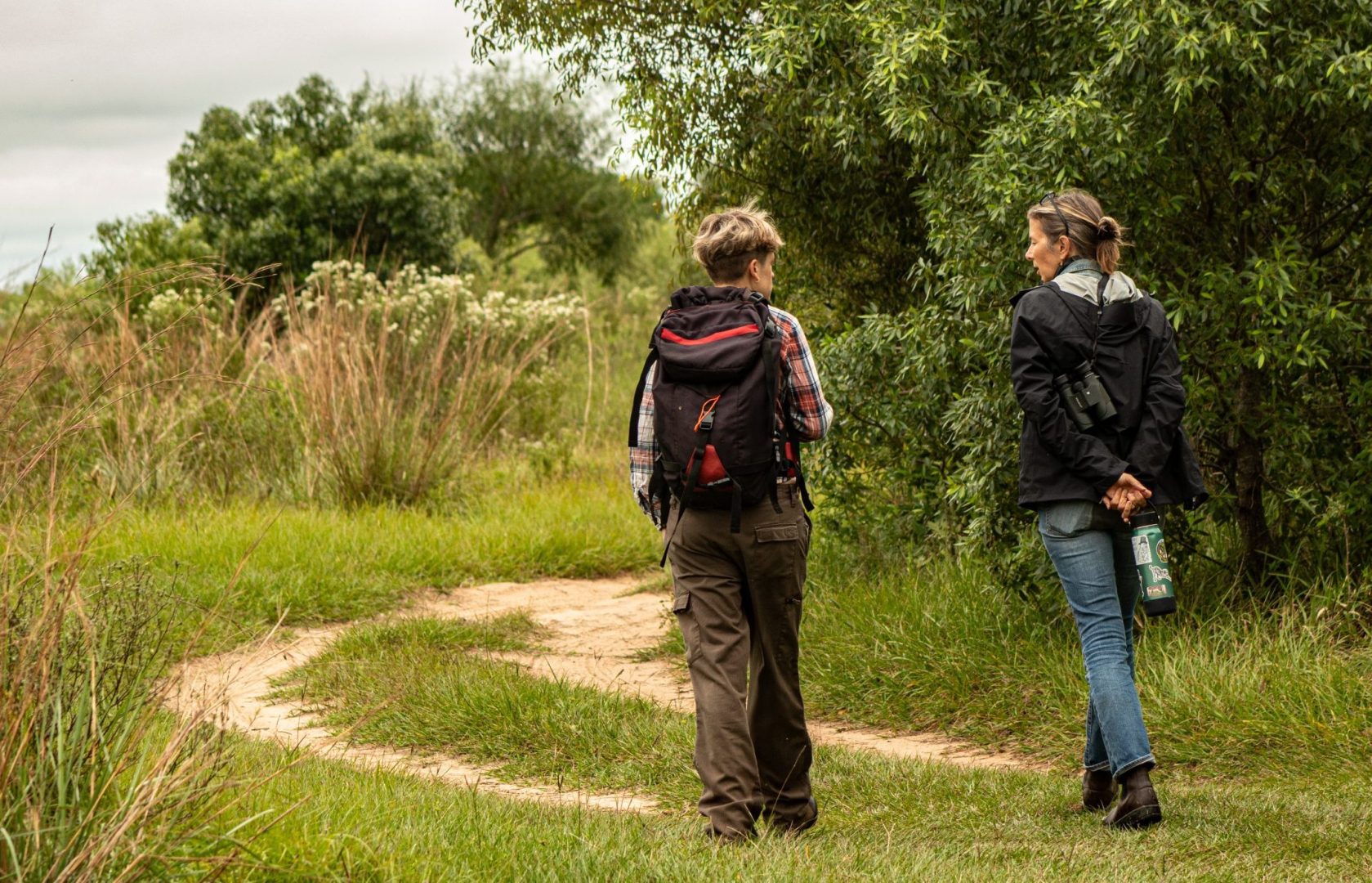
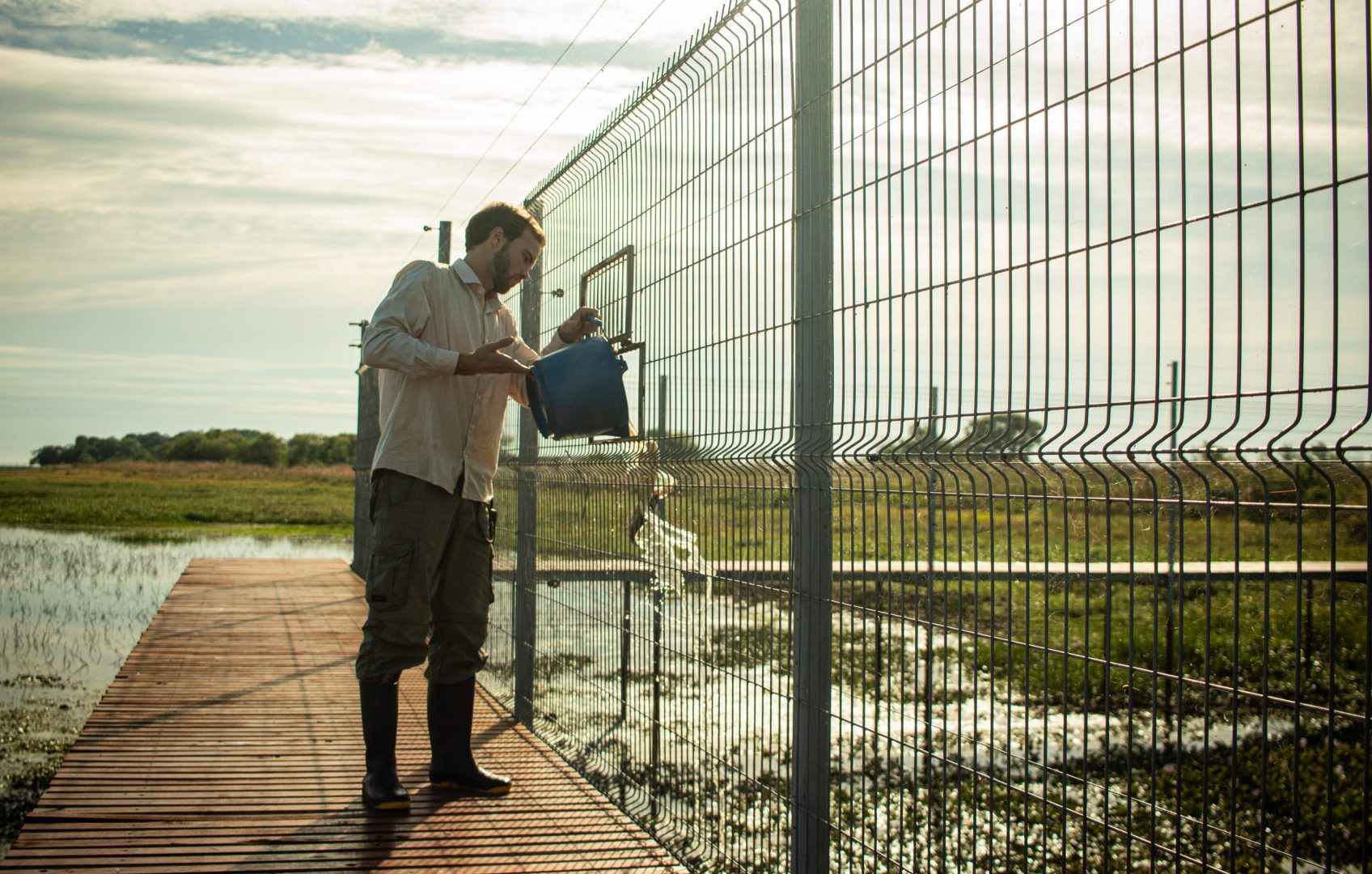
The people who act as the backbone of Rewilding Argentina are just as much the story of this place as the otters, capybaras, and big cats. The field teams are dedicated, they work hard, with certainty, and they inspire. For the length of our stay, we shadowed our hosts to experience what their varied days involve at the jaguar breeding and reintroduction center, the giant otter pre-release pens, with infrastructure, and with monitoring. These areas are not open to the public, since the goal is for animals to become fully wild, unaccustomed to humans.
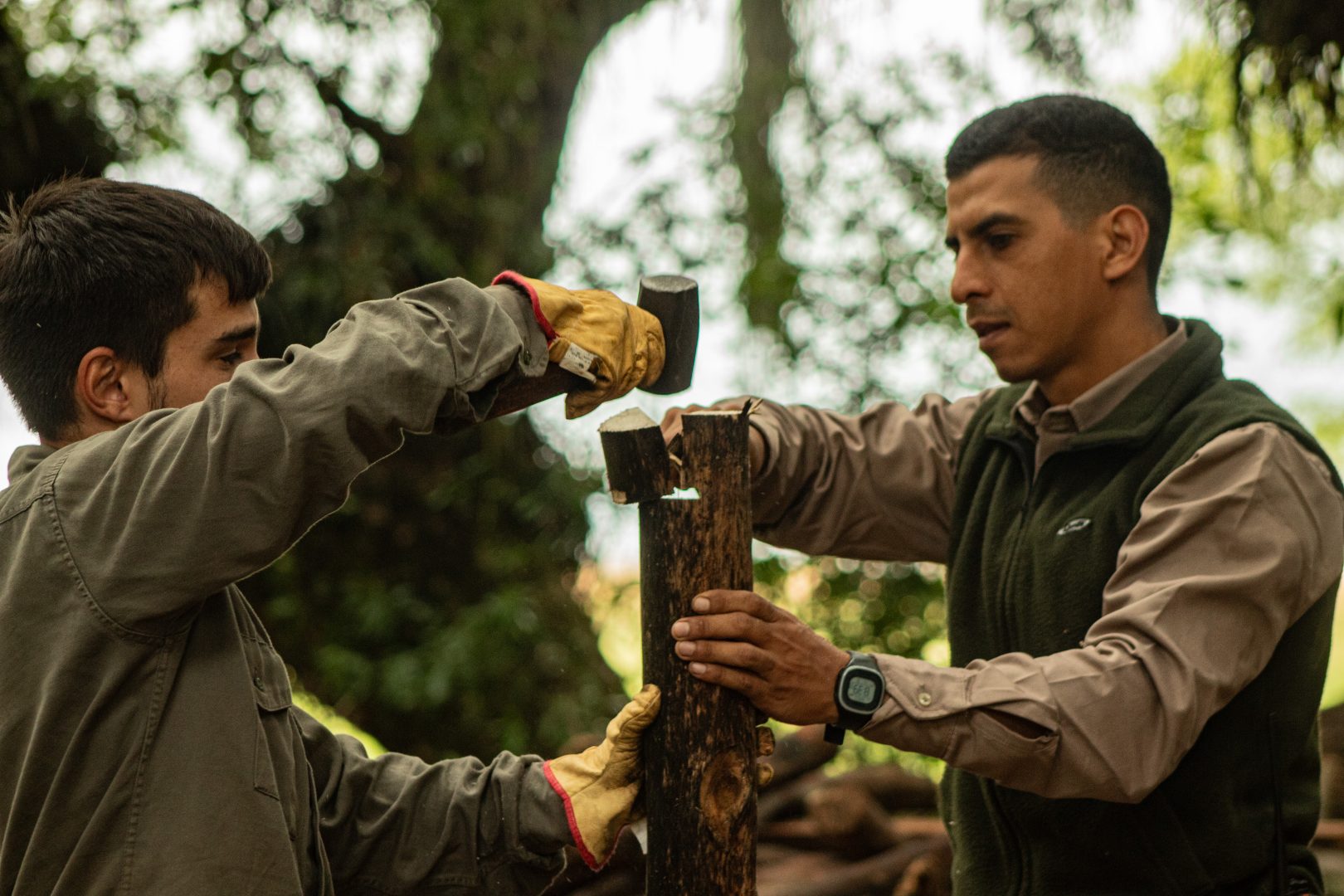
One morning was centered around hunting an oversized feral chancho, using stealth and precision to control this exotic pig species. In the afternoon, we repaired a shade structure inside a jaguar enclosure and, underneath the canopy of a large tree, we built a nursery for future cubs. The enclosures for all of the animals are carefully designed, and the on-the-ground team is skilled with tools, electricity, mechanics, and hydraulics to make improvements and keep everything in working condition.
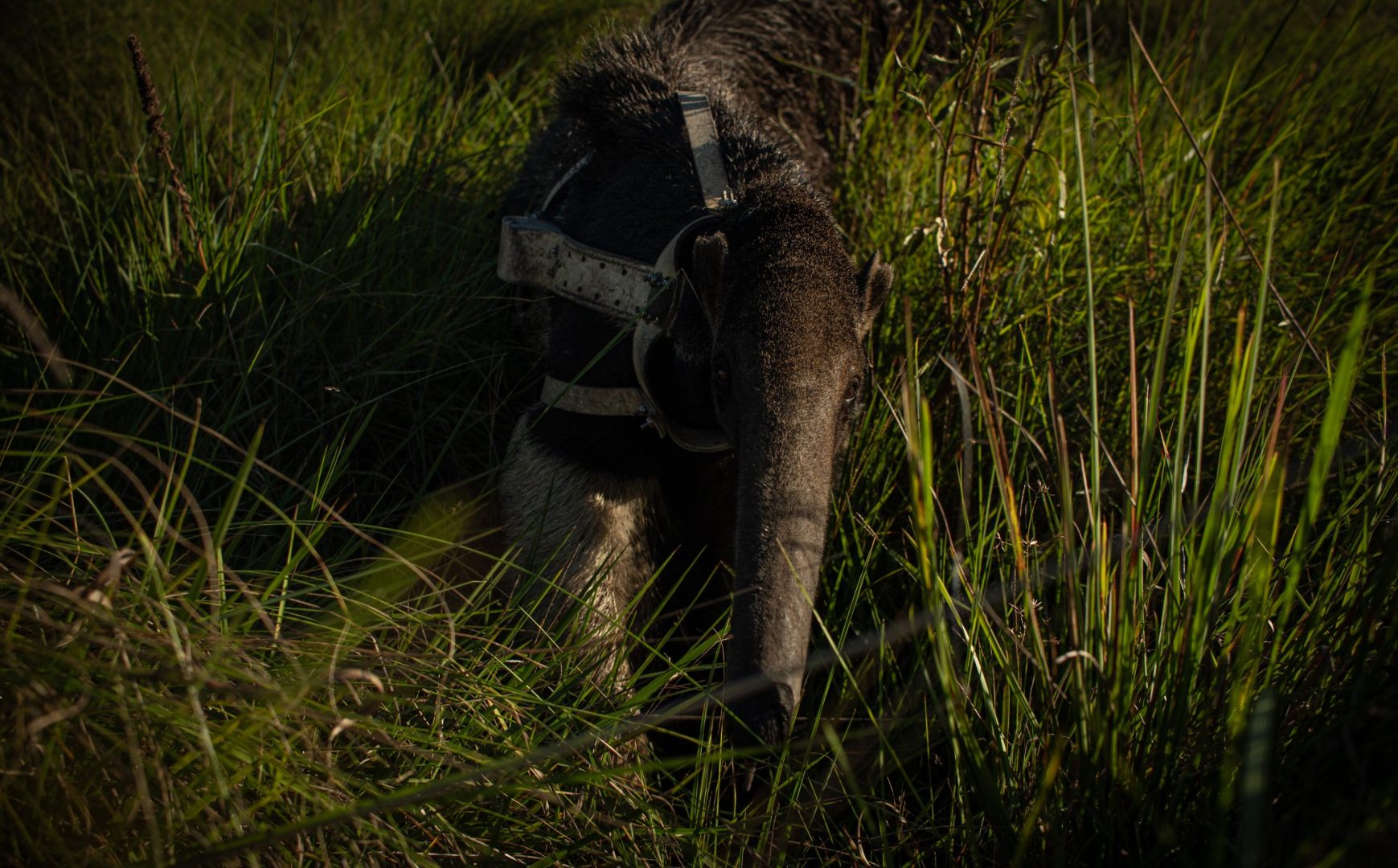
Another day, we set out on horseback to retrieve motion-triggered cameras that are used to understand how jaguar presence impacts prey populations, and we examined the remains of a capybara killed by a now-wild jaguar. We trotted across the mowed grass of the landing strip and, with the aid of a radio telemetry unit, entered the clumpy, waist-high grassland to check on a giant anteater named Mercedita. Rescued as a baby, raised at a rehabilitation center, and released into the wild years ago, she was napping when we found her. Mercedita is part of an established population and is the only anteater in this area who continues to be monitored.
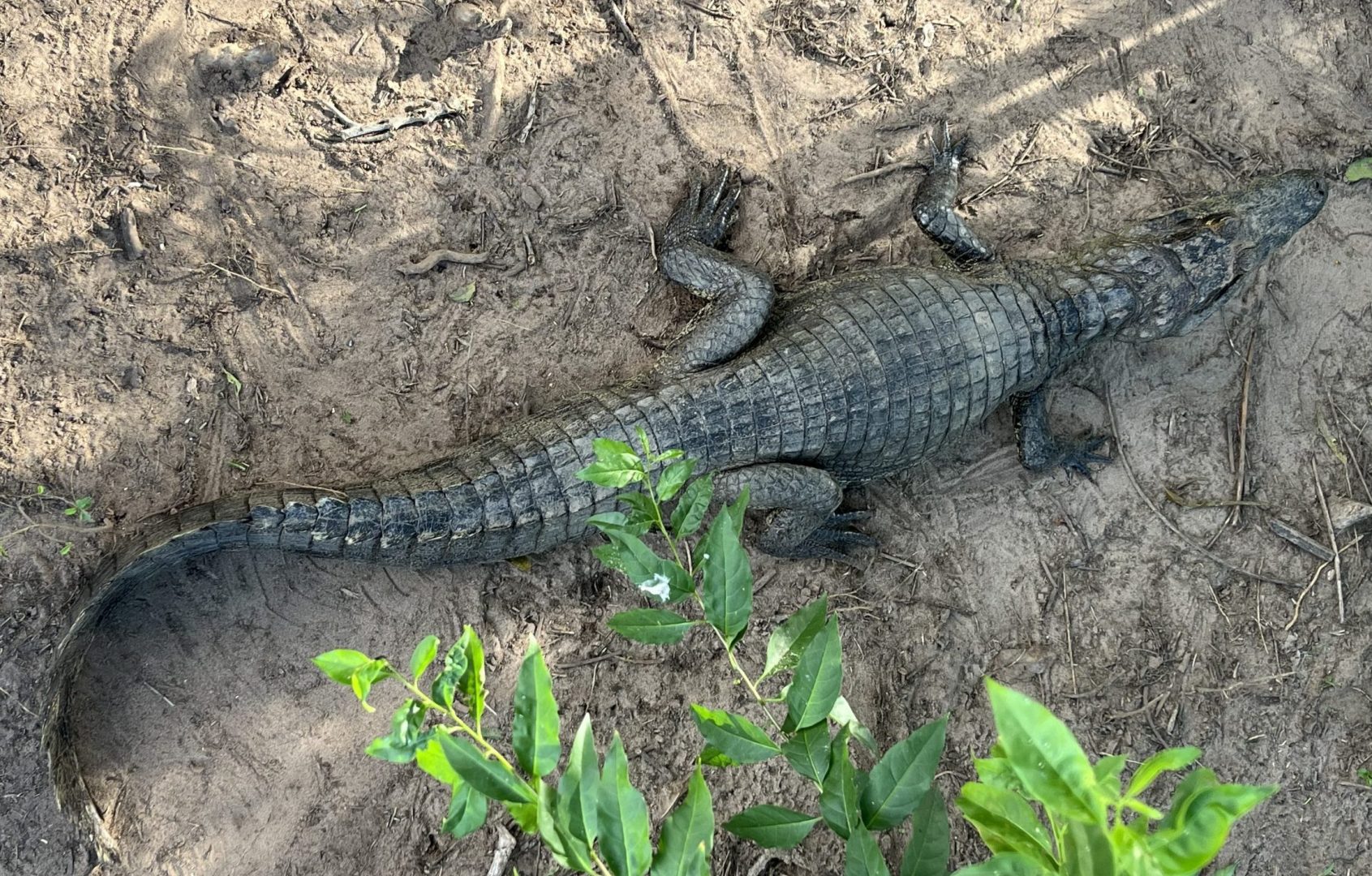
Nearly every evening, two team members went to catch the caimans who would be deposited inside the enclosures to feed the felines destined for reintroduction, while others weighed fish to feed three families of otters. Each otter has to eat 10 percent of their 50- to 70-pound weight every day, so their caretakers are very aware of their diet. We asked ourselves, what is the most wild / natural way to meet one species’ needs while inflicting the least possible harm on another.
For us, coming from Arizona and Sonora, Iberá is the opposite bookend of the jaguar’s range. Rewilding Argentina set out to recover jaguars in this landscape, and the population has gone from zero to 35 individuals in four years – solidifying this as one of the most ambitious wildlife recovery efforts in the world. While jaguar reintroduction has been remarkably successful here, the question now is whether such results can be replicated with giant otters, the top predator in aquatic ecosystems. Both species were locally extinct; both have returned.
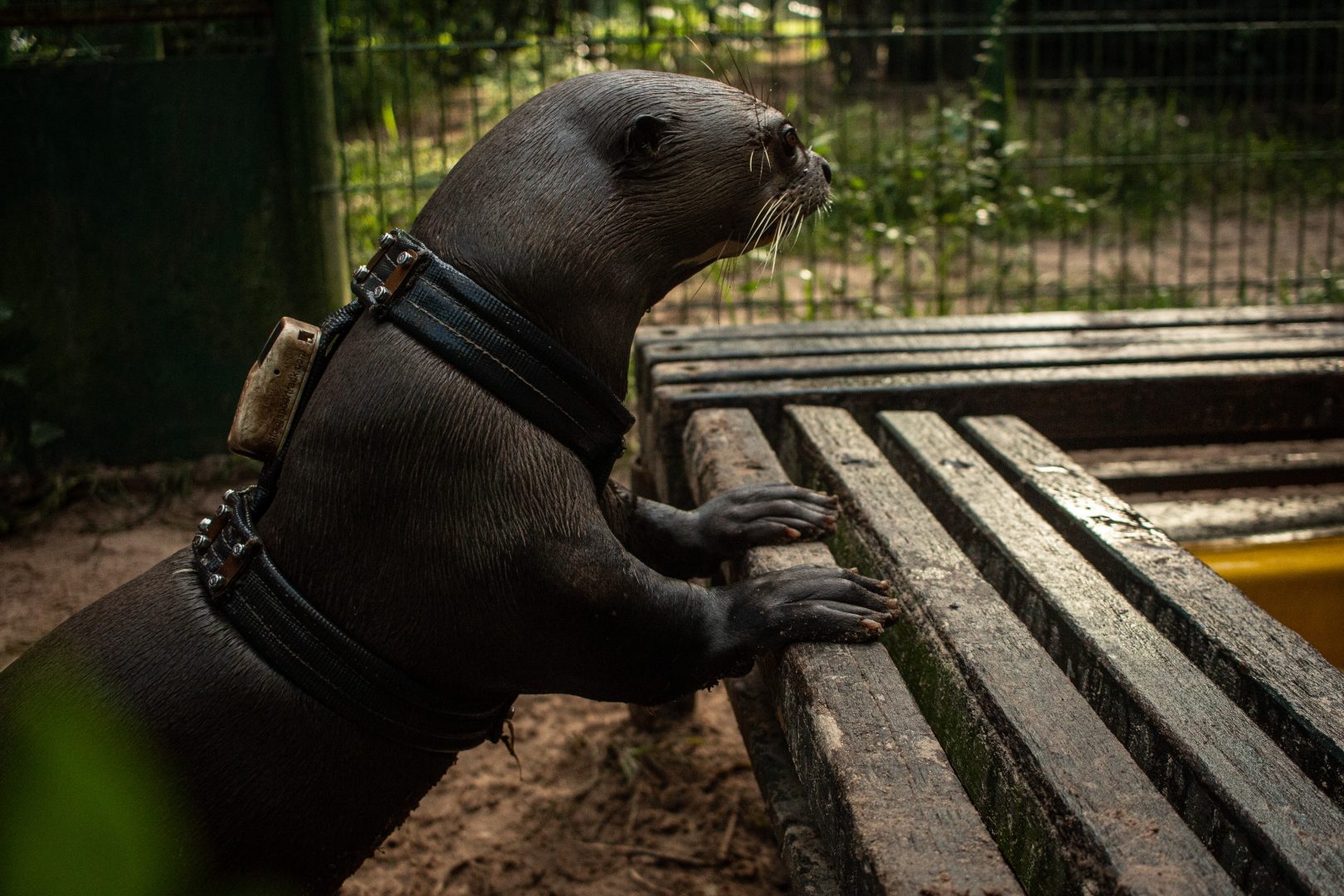
Giant otters are social, curious, and it is hard not to ascribe “joyful” to them. They are extremely vocal and seemingly enthusiastic about everything: eating, swimming, playing, rolling in the sand. From what we observed, they are masters of being fully present and appreciating every moment. At least one of us left Argentina having these otters in mind as a model for how to live.
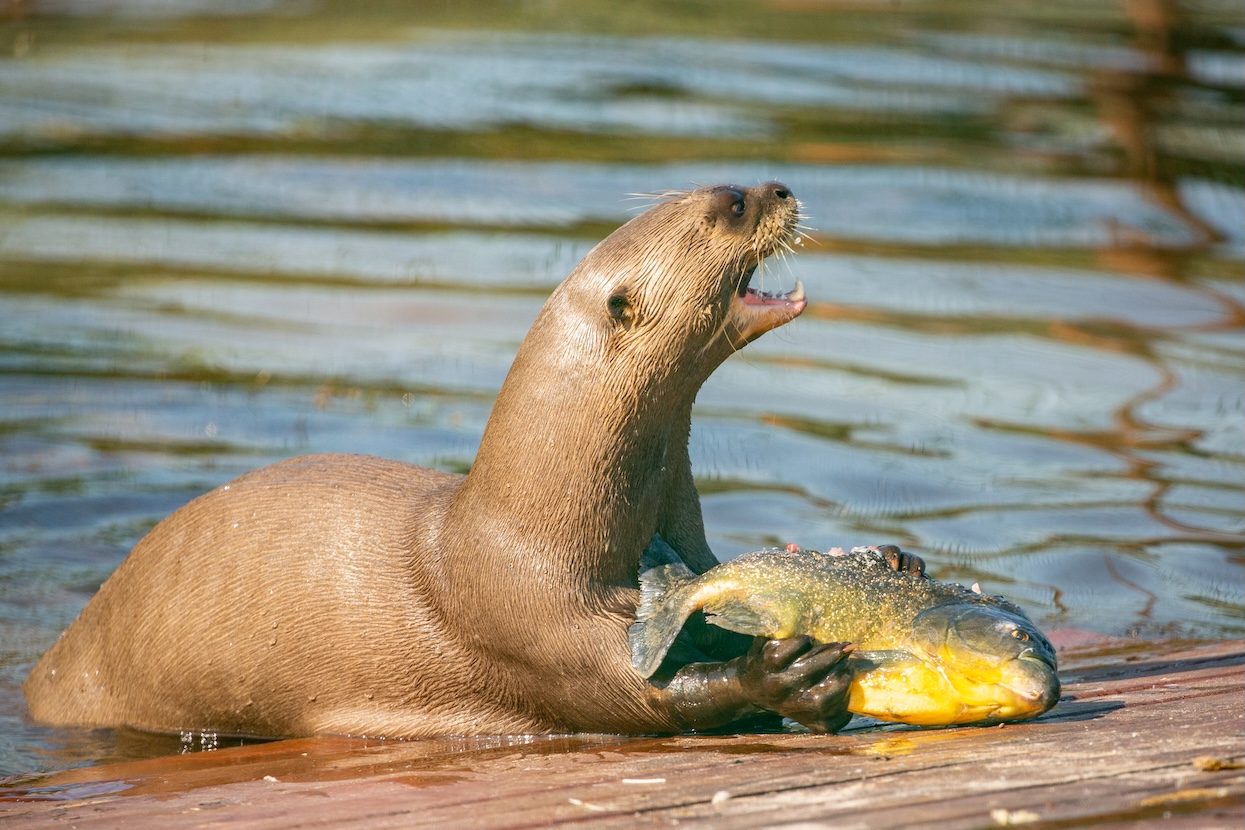
They are sometimes called “jaguars of the river” thanks to their size, hunting ability, and dominance. They are fiercely territorial, powerful, nimble on land, and agile in the water. Also known as lobo gargantilla, or “wolf-throated otter,” individuals can be distinguished by the necklace of white markings on their throats. Giant otters mate for life and stay together in bonded family groups, which protects them.
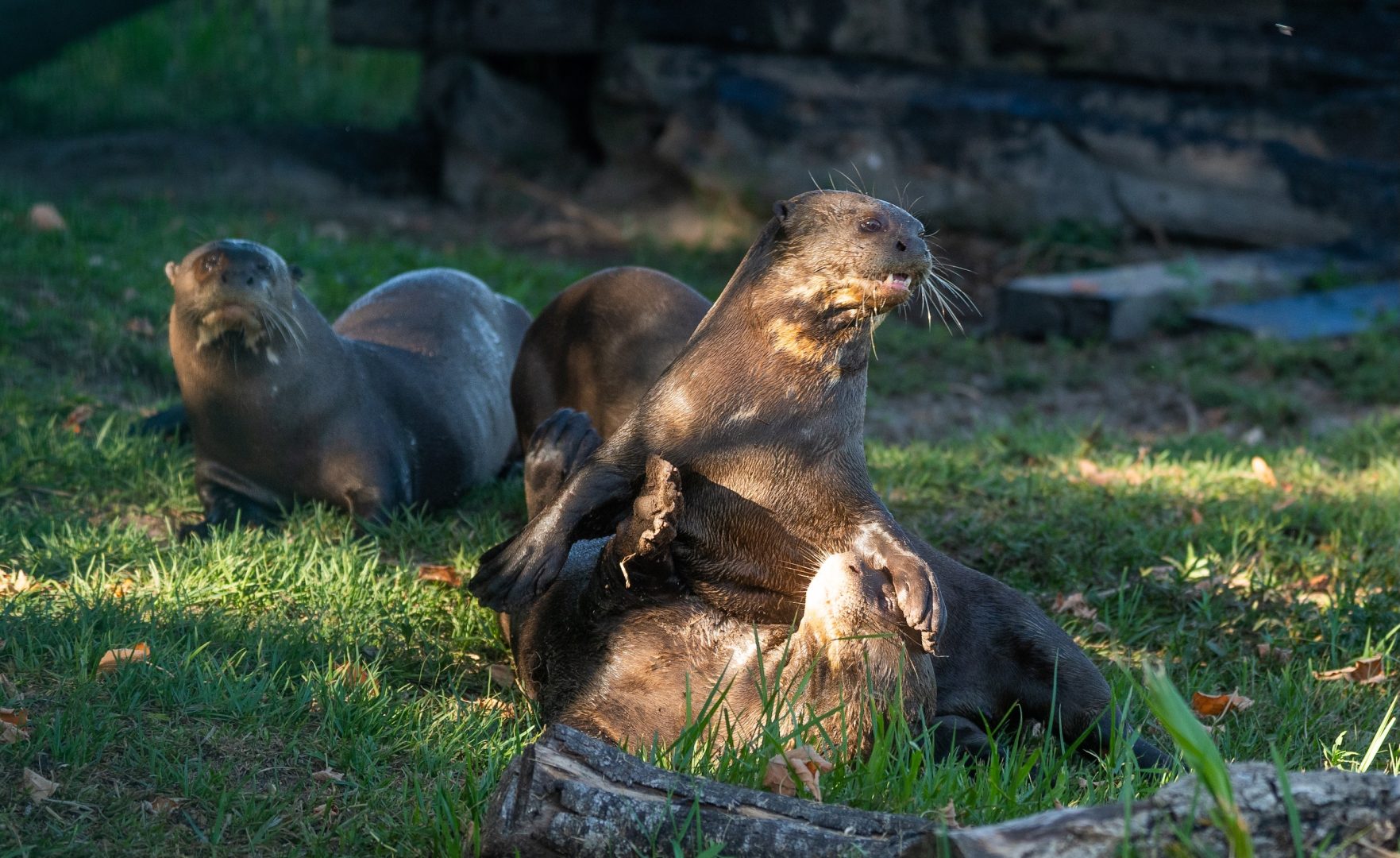
Of the three families being prepared for release when we were at Iberá, one is already swimming freely. The return of giant otters to the wild, a historic milestone, was long-awaited and not without challenges. Rewilding Argentina had to start from scratch to develop the knowledge and logistics to bring back the otter. It took eight years of planning; the first animals arrived from captive facilities in Europe six years ago; and it has been four years since the first pups were born in the pre-release pens.
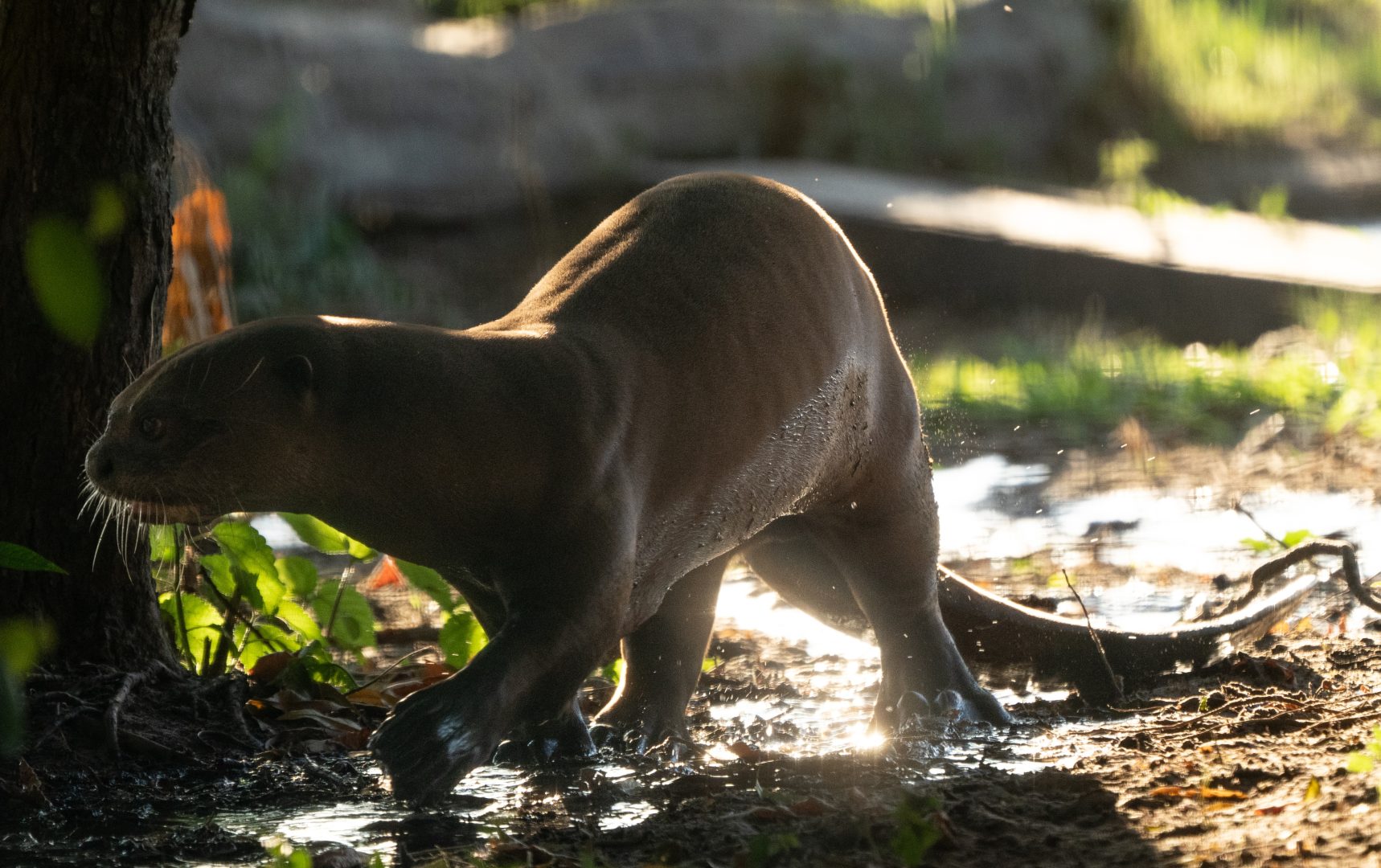
Today, two adults and two pups are living in the Paraná Lagoon among the caiman and capybara. With these inaugural otters, a fundamental part of the ecosystem is present after nearly 40 years of absence. These individuals, the founders of a future population, have already strengthened the ecological balance of the aquatic environment.
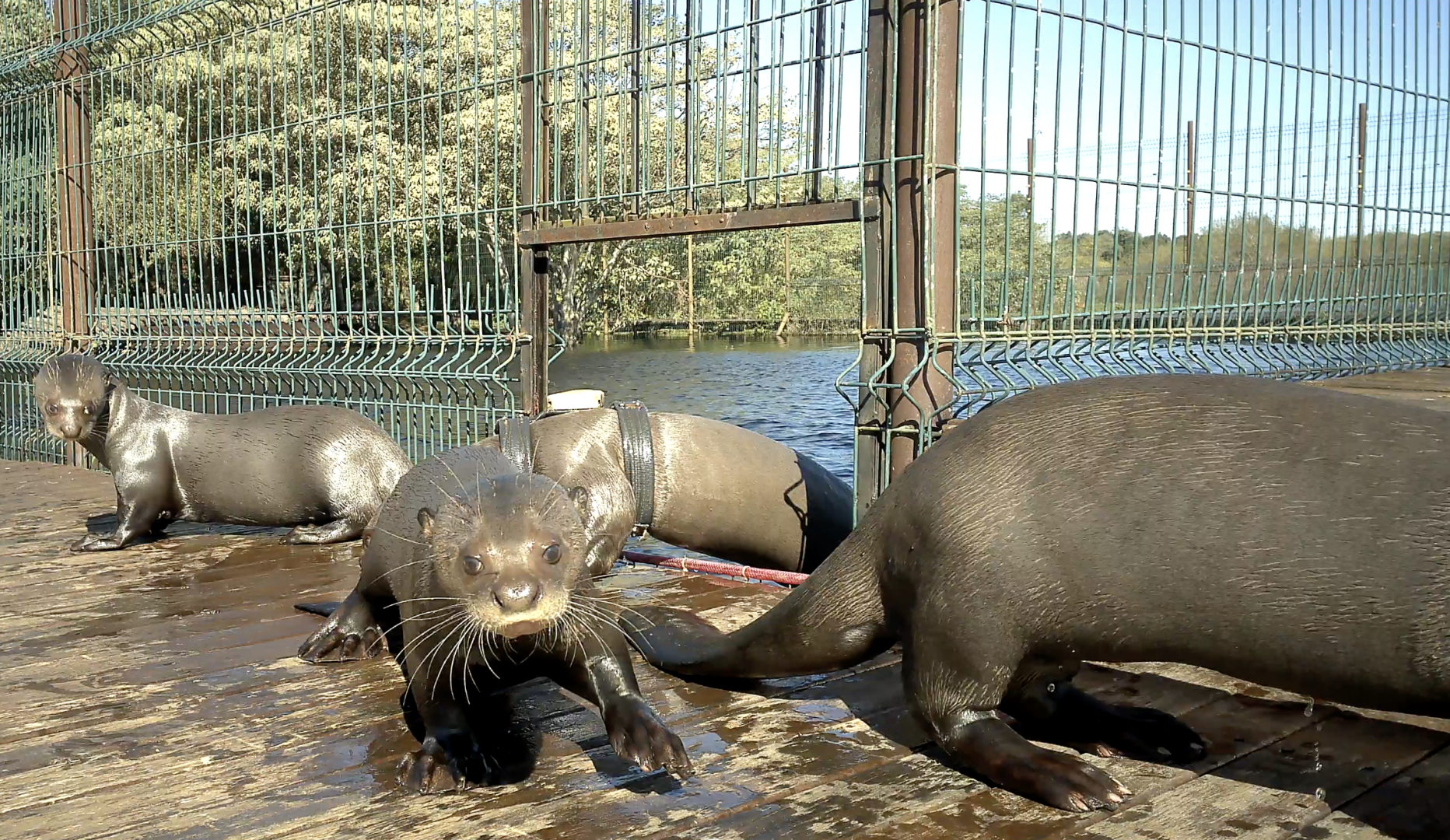
The idea is that more otter releases will follow on the heels of the first. The second family we met had pups over a year old and was waiting for the mother to recover from an injury. The parents of the third family were still figuring out how to teach their sole pup to hunt. This harks back to our fishing excursion to capture live prey for the otters, so they will learn to forage on their own and have the skills needed in the wild. Shortly after we left, this last otter family surprised everyone when three more pups were born. Already a new chapter is beginning, one that breathes life into Iberá, where all species return.
All giant otter photos after the first, courtesy Rewilding Argentina… They have our many thanks, for these images and everything. More about the otters here, listen to the otters here.
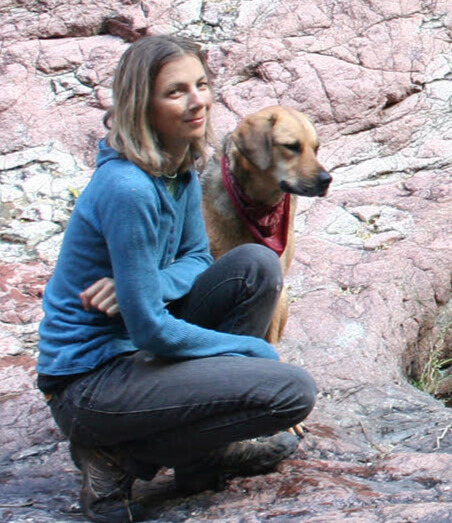
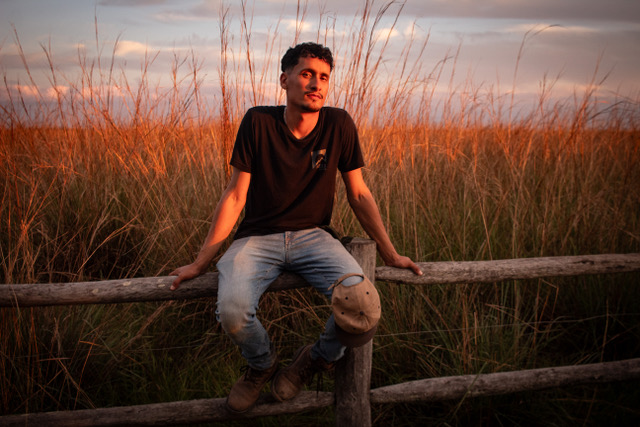
Jorge Chacón is a conservation photographer and ecologist from Hermosillo, Sonora, and the conservation communicator for Cuenca Los Ojos, which works to restore ecosystems of the U.S.-Mexico borderlands to bring back water, soil, and life. He has worked with community projects related to food security, desert foods, botany, outdoor recreation, and nature-based education.