
Tracking Red Wolf Recovery: From Seven to Twenty-Eight
February 27, 2026
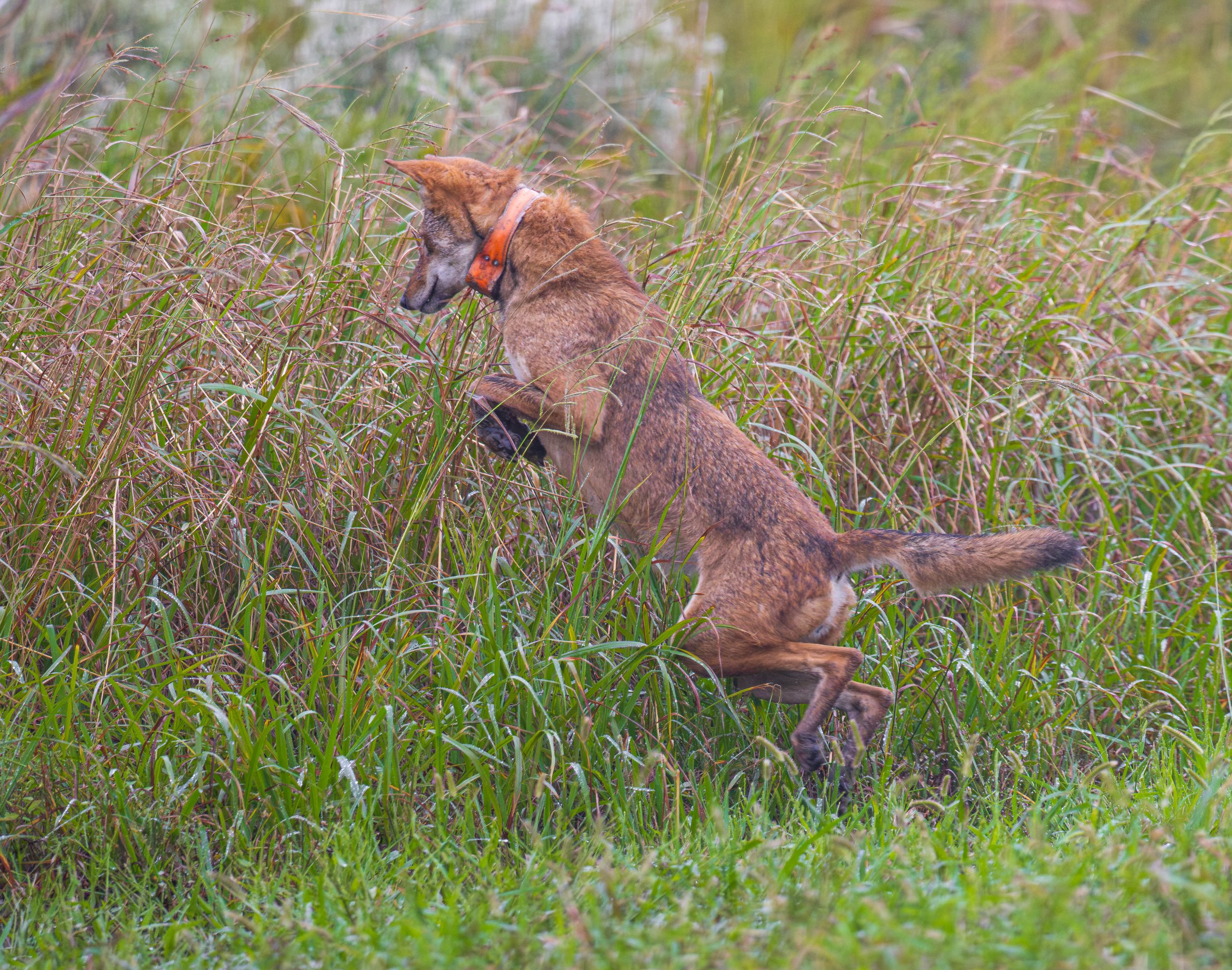
Photo by Eric Trefney
As a new year begins, so too do new and exciting updates from the Red Wolf recovery efforts. Ten sub-adult Red Wolves have been fitted with GPS tracking collars, and the U.S. Fish and Wildlife Service (USFWS) estimates that about half of the Red Wolf puppies born last year have survived their first year in the wild! That is a remarkable number considering the many difficulties these critically endangered canids face.
The current number of GPS-collared, wild Red Wolves is 26 individuals, and there is a total wild population of around 28 individuals (some GPS collars have become inactive, and some Red Wolves have not been fitted with GPS collars but have been seen on the landscape). While this number may seem low, I personally remember when there were only seven Red Wolves in the recovery area, merely six years ago.
There are now five distinct packs within the Red Wolf Recovery Area in northeastern North Carolina. One wolf dispersed more than 30 miles from his home territory in the Alligator River National Wildlife Refuge to the Pocosin National Wildlife Refuge, in search of a mate. This wolf exemplifies the significant amount of distance these magnificent animals can travel, even near large towns and busy roads. Below are the most recent updates regarding the wild Red Wolf packs/individuals within the established recovery area:
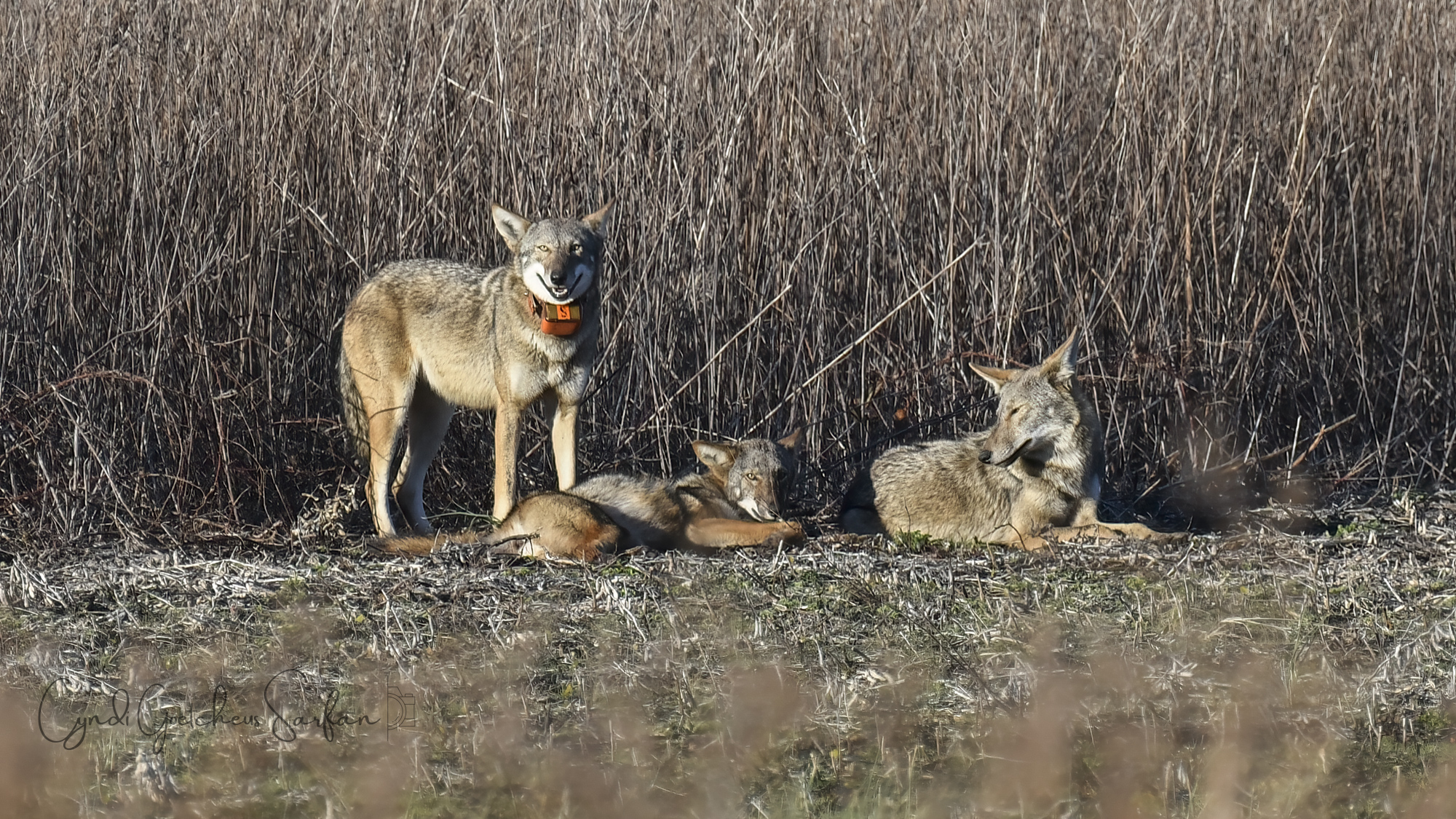
Photo by Cyndi Goetcheus
Milltail Family Group — This pack consists of five newly GPS-collared sub-adult wolves and two GPS-collared adult breeding Red Wolves. The recovery team uses soft foot holds to safely secure and restrain the wolves so they can provide checkups as well as new GPS collars. The pack has been a steadfast group over the years and looks to continue that trend moving forward.
West Alligator River Family Group — This pack consists of three newly GPS-collared sub-adult wolves and two adult GPS-collared wolves. This pack also includes a cross-fostered sub-adult from the Saving Animals From Extinction (SAFE) program, which holds a large captive breeding Red Wolf population in participating zoos throughout the U.S. The foster wolf will provide much-needed genetic diversity to the wild population if he survives to breeding maturity.
Boundary Family Group — This pack consists of two newly GPS-collared sub-adult wolves and two GPS-collared adult wolves. The hope is that this little pack continues to grow and claim new territory.
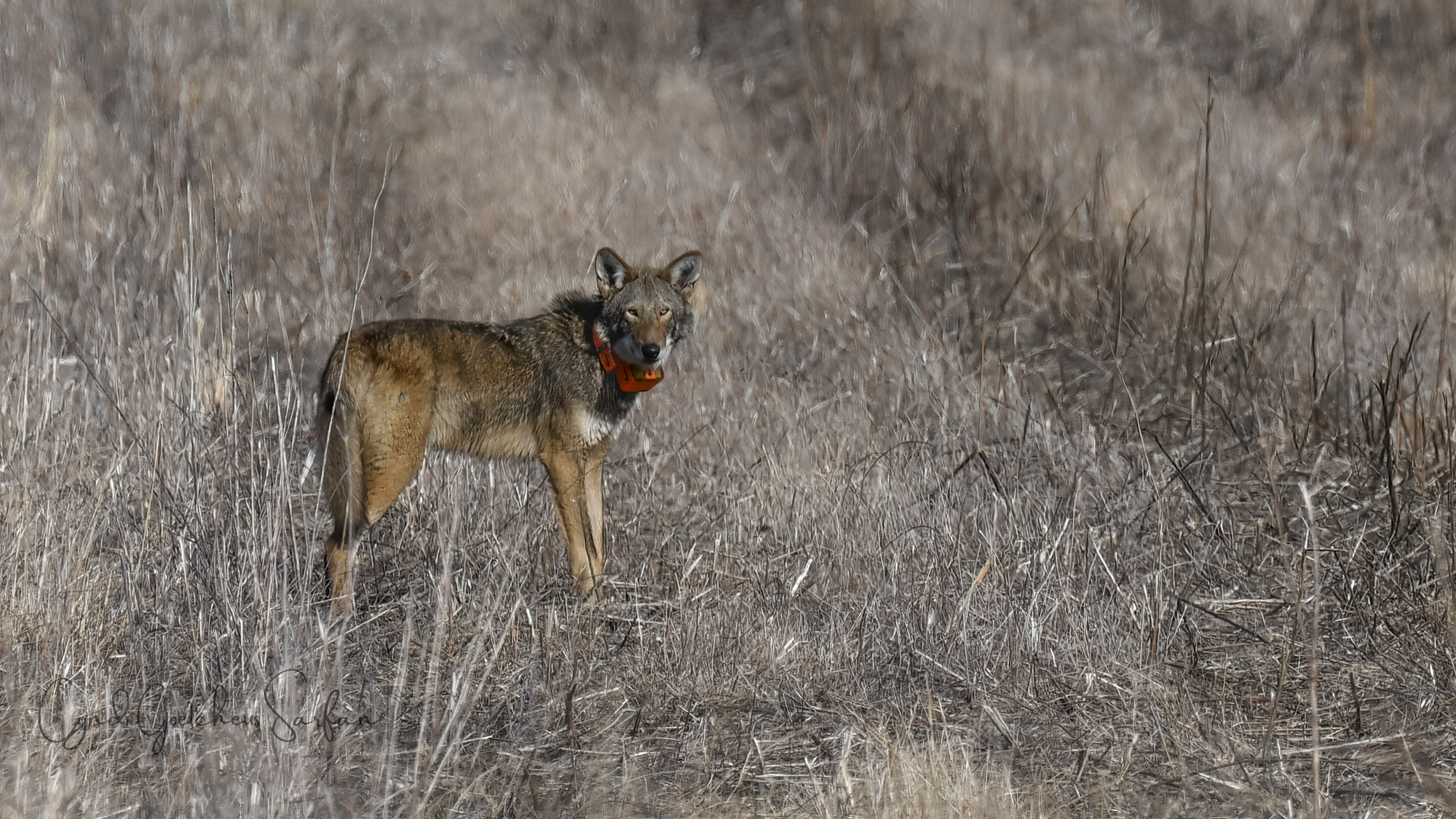
Photo by Cyndi Goetcheus
Central Pocosin Family Group — Based on monitoring by USFWS, the three puppies born to Red Wolves 2359F and 2443M did not survive. This small pack of two wolves will hopefully produce a new litter of puppies this Spring. Both breeding adult wolves have been fitted with GPS collars.
Loblolly Pack — In August, breeding male 2307M’s GPS tracking collar produced a mortality signal. This signal is triggered when a wolf hasn’t moved for 24-48 hours. His death was confirmed by the recovery team and is currently under investigation by law enforcement. His mate is now paired with the male mentioned earlier who traveled from his original territory in Alligator River to the Pocosin area. Hopefully these newly bonded wolves will produce a litter of puppies in the Spring.
Red Wolf 2612F — This wolf was a recently GPS-collared sub-adult and a member of the West Alligator River Family Group. Sadly, after she was collared, she was unnecessarily struck and killed by a vehicle on U.S. Highway 64. If you have been following my writing about Red Wolves, you know that U.S. Highway 64 is currently the main culprit for Red Wolf deaths. In a meeting with the USFWS Red Wolf Recovery Team and several partners, it was reported that construction of wildlife crossings is still moving forward with the North Carolina Department of Transportation via the Federal Wildlife Crossings Pilot Program. The hope is to break ground on these crucial wildlife crossings on U.S. Highway 64 in the Red Wolf Recovery Area in 2026.
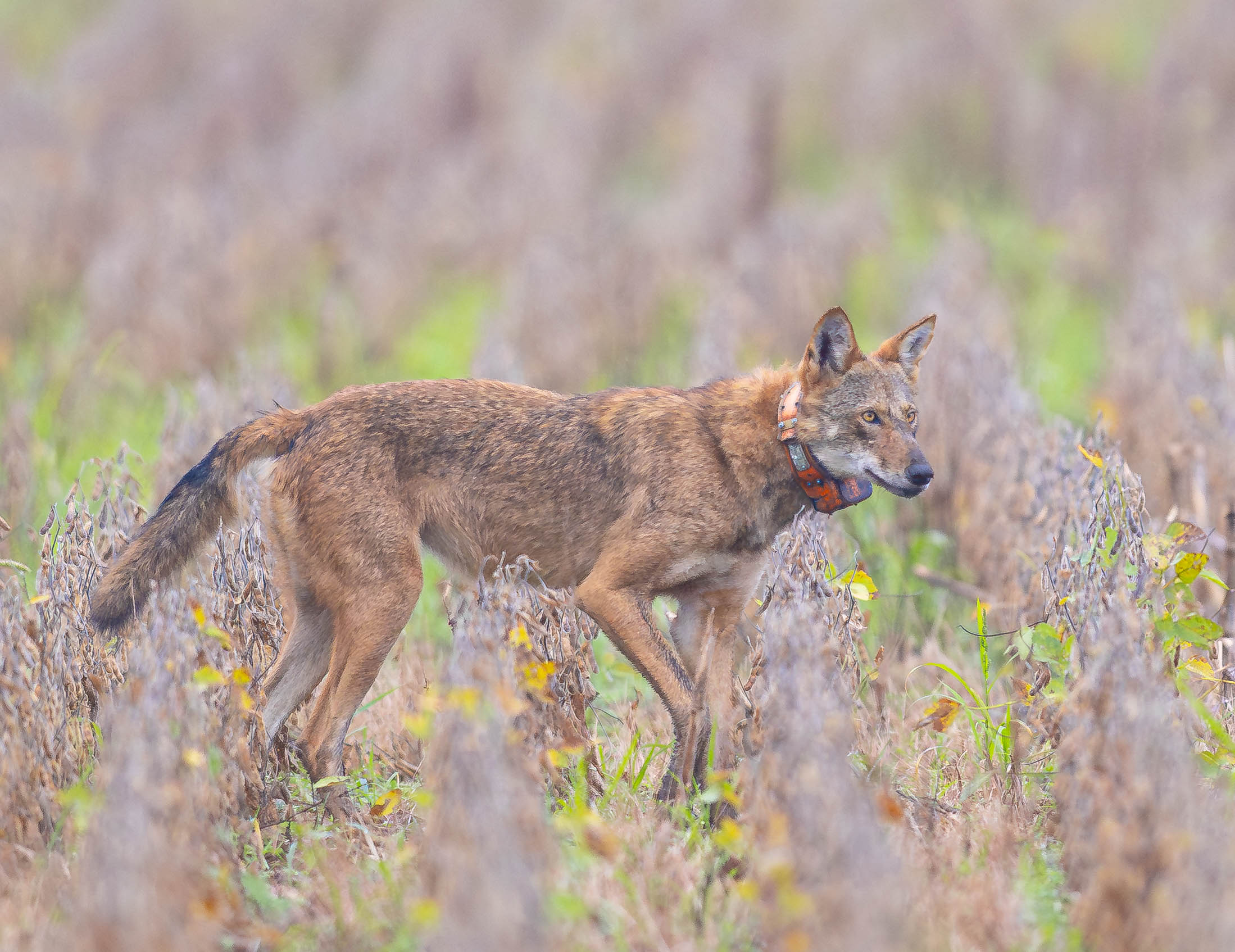
Photo by Eric Trefney
St Vincent, Florida — The USFWS Red Wolf Team manages and monitors St. Vincent Island on the Gulf of Mexico off the coast of Florida. A small, rotating population of Red Wolves lives on the island as part of recovery efforts. This island provides a natural space for the wolves to live while not being confined to a breeding enclosure and with limited human presence. A male wolf was released on St. Vincent from the SAFE program in hopes that he would breed with a wild female wolf, who was born on the island. The two bonded and produced three puppies! This is the first litter of puppies born on St. Vincent since 2019! The puppies have not yet been collared as they are too small. St. Vincent Island provides Red Wolves with “practice” living in the wild before they are potentially released into the Red Wolf Recovery Area.
Elusive Red Wolf 2225F — Red Wolf 2225F has not been fitted with a new GPS collar in several years; she is extremely elusive, although she is very active on the landscape. Many who photograph wild Red Wolves know Red Wolf 2225F is the stuff of legends. In 2022, she produced the first wild litter of Red Wolf puppies since 2018, and she has gone on to whelp several more litters. Since several of her offspring have produced their own puppies, Red Wolf 2225F is considered a founder of the many packs we see today. More recently, Red Wolf 2225F has since “retired” as the breeding female for the Milltail Pack; her daughter has taken that title. Red Wolf 2225F has often been monitored via trail cameras taking her grand-puppies out to hunt and explore in their new territory.
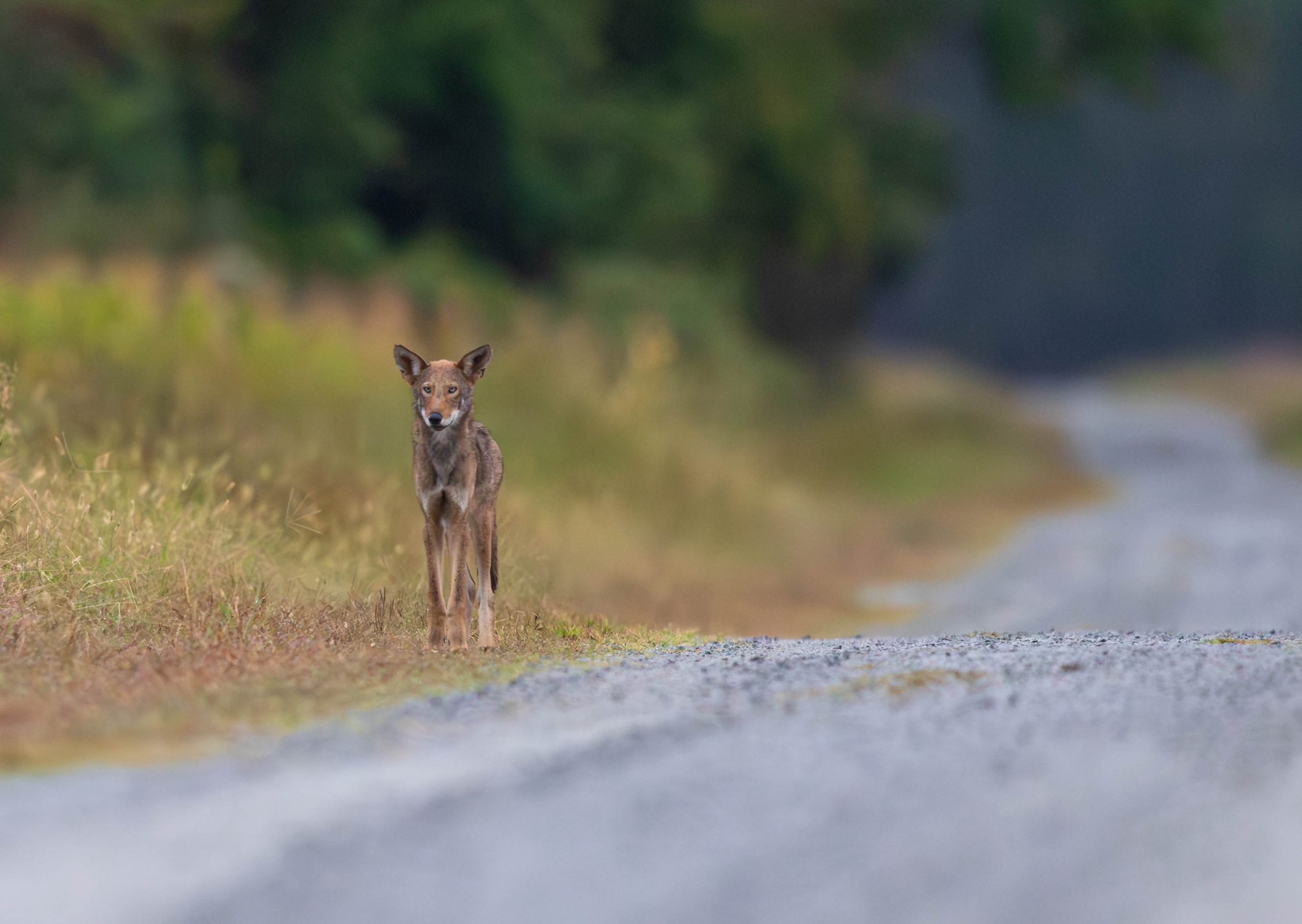
Photo by Eric Trefney
As we all know, conservation and rewilding can be a slow-paced journey that at times feels like very little progress is being made. Everyone who is involved in this noble journey has been met with heartbreak and immense challenges. However, conservation and rewilding are stories of perseverance that are often a slow climb to a balanced environment and a healthy ecosystem; I encourage you to stay positive and optimistic. While 28 Red Wolves may seem like an insignificant number, we must remember that the wild population was merely seven individuals only six years ago. In 2020, wildlife crossings in Red Wolf country seemed like a pipedream, yet that challenge has been met by the unwavering support of many avid Red Wolf and wildlife supporters throughout the world. As we continue this journey, we will undoubtedly be met with more difficult stories, but we must not be deterred. We must remember that if seven Red Wolves can survive to become 28 wolves in such a short time, we too can continue forward in helping recovery efforts of the most endangered wolf in the world, the Red Wolf.
You can read the full updates from the USFWS Red Wolf Recovery team here.

Eric Trefney grew up in Michigan in the metro-Detroit area, where he would often camp and canoe with his family and friends. After finishing graduate school in 2015, Eric joined the Peace Corps where he was assigned to Senegal, Africa, in the Sahel desert region. Eric practiced and trained in agroforestry techniques with local Senegalese partners as well as women’s financial literacy. In 2018, after his 2 years of Peace Corps service, Eric moved to the Washington D.C. area and was gifted a camera by his dad. After learning about the critically endangered Red Wolves in North Carolina, Eric’s passion project became photographing, educating, and advocating for the Red Wolf’s survival. Eric and his partner Dani currently reside in Virginia and are often out enjoying the state’s beautiful parks and rivers.