
Chile’s Vast Kelp Forests Promise Climate Refuge, with a Warning
May 7, 2026
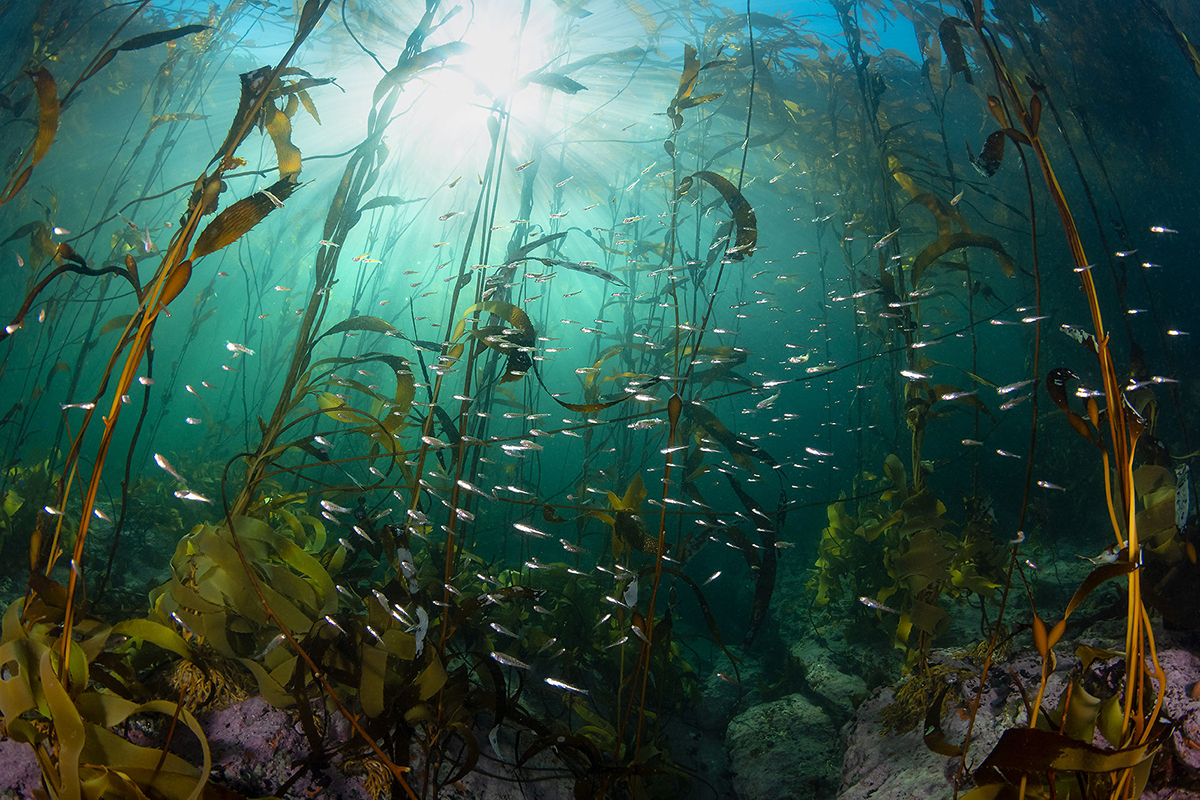
Photo by Eduardo Sorensen
An interdisciplinary team led by Rewilding Chile has completed the first phase of the Patagonia Megatransect — an ambitious, multi-stage underwater journey spanning 745 miles from the Gulf of Corcovado to Cape Horn. The project documents one of the planet’s largest intact kelp forests and uses advanced technology to advocate for their protection.
The expedition ventures into a little-known ecosystem of monumental scale: the forests of Macrocystis pyrifera, giant kelp that reach lengths up to 260 feet. One of Earth’s most efficient natural carbon sinks, giant kelp are able to absorb up to 20 times the amount of carbon as forests on land. By measuring their precise capacity, the new data could position Chile as a leading planetary reservoir of blue carbon.
“Our initial findings show Patagonia’s fjords and channels remain a global climate refuge for kelp forests, which on a planetary scale have been reduced by up to 90 percent in some regions,” says Mathias Hüne, director of the marine program at Rewilding Chile. Hüne cautions, “We also found urgent threats, including plumose anemone (Metridium senile), an invasive species whose rapid advancement is decimating kelp habitats, and recorded the disappearance of a kelp forest documented with satellite imagery only two years ago. We’re effectively in a race against time to protect these valuable ecosystems.”
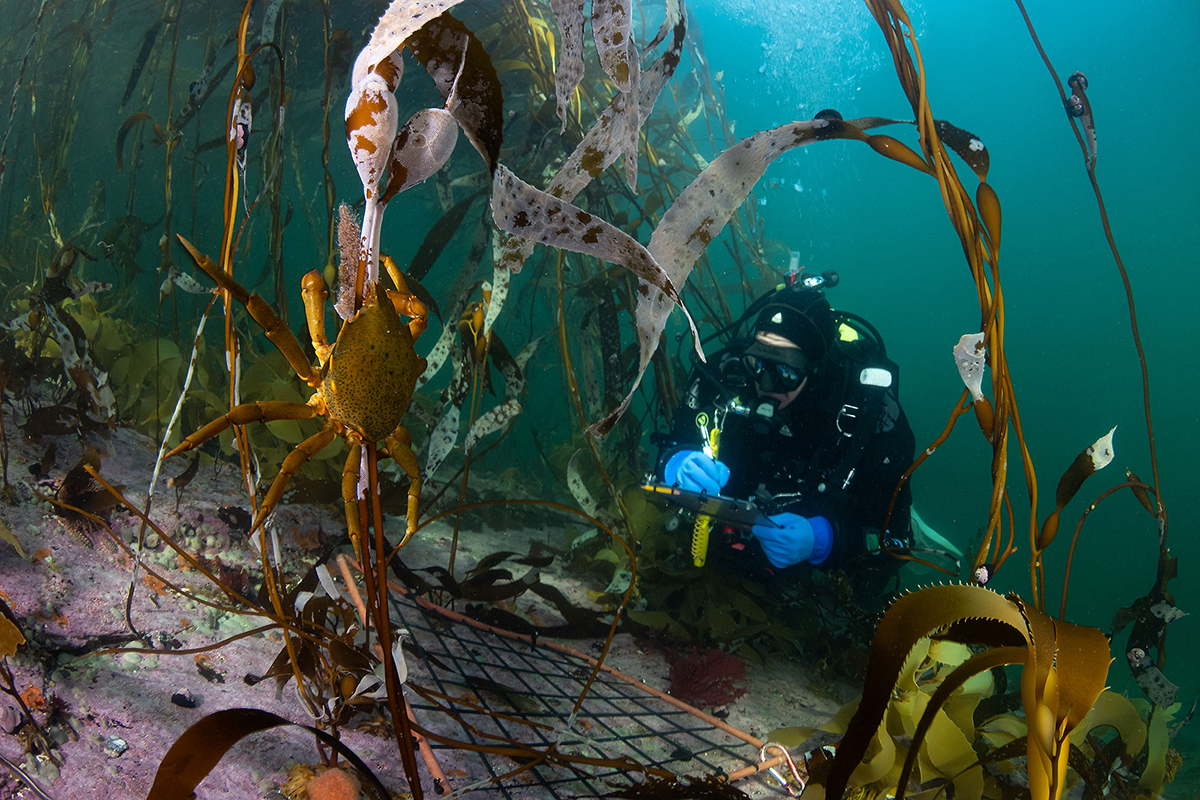
Photo by Eduardo Sorensen
Between January 2026 and March 2027, the scientific team will be conducting underwater campaigns over the course of six expeditions. The project features 90 sampling sites and 180 scientific transects, using more than 7,200 underwater photo quadrants to survey diverse ecosystems that range from the channels and fjords surrounding glaciers to islands in the open ocean.
Using advanced technology to record underwater biodiversity, such as environmental DNA and underwater photo quadrants, scientists are already processing data, cataloging species, and identifying biodiversity hotspots essential to marine health and the local fishing economy. In the Magallanes region, artisanal fishermen have proposed a 10-year fishing ban to protect kelp forests that offer essential habitat for sea urchins, king crabs, and scallops.
“It’s time to usher in a new era of science-based marine conservation,” says Carolina Morgado, executive director of Rewilding Chile. “These expeditions will help us better understand the Southeast Pacific Ocean by taking into account the biological wealth of Patagonia and the planet’s changing climate.”
The findings will be published in scientific journals and made available through the Global Biodiversity Information Facility, administered in Chile by the Ministry of the Environment.
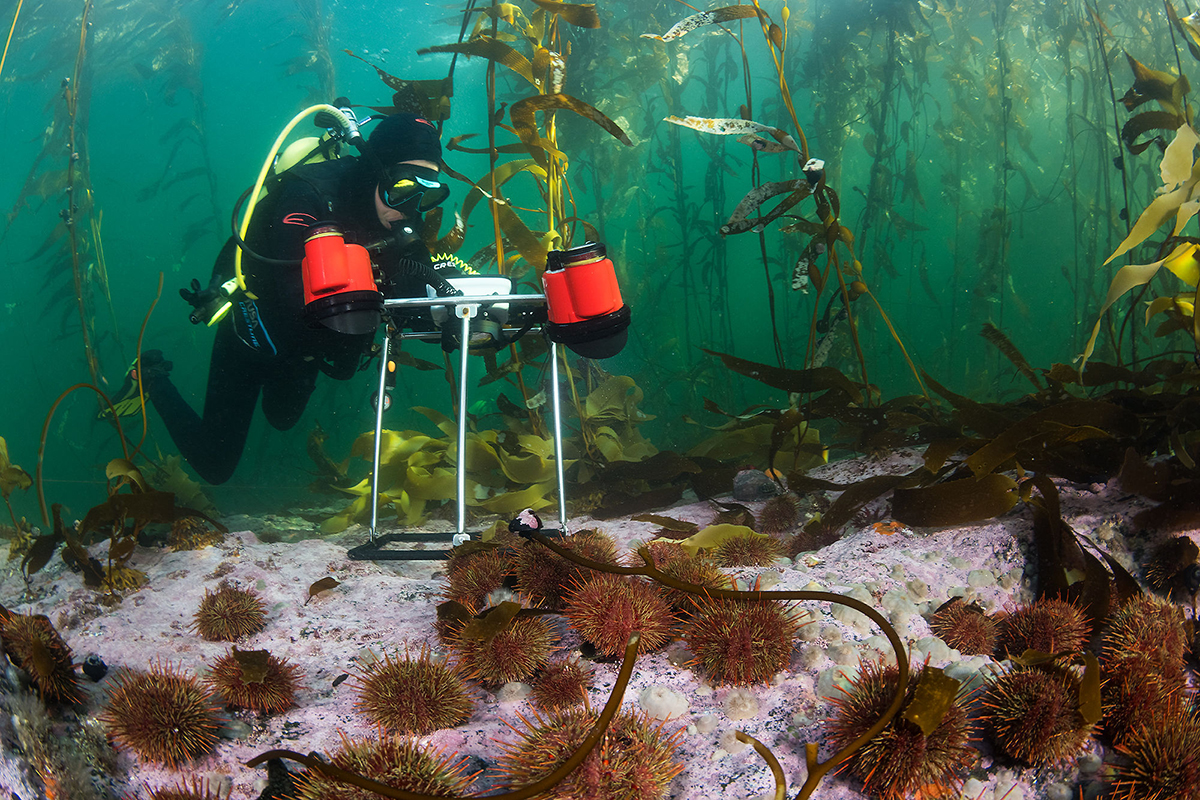
Photo by Eduardo Sorensen
An Expedition Rooted in Scientific History
Almost 200 years after Charles Darwin made his first observations aboard the Beagle, and more than 50 years after marine ecologist Paul Dayton of the Scripps Institution of Oceanography made the first underwater observations of these forests, a new team of scientists returns to Patagonia to continue that exploratory legacy with 21st-century tools. They are inspired by Michael Fay’s legendary African Megatransect, which contributed to the creation of a network of national parks in Africa.
International partners supporting the initiative include the Ecological Restoration Fund and Plum Foundation. The scientific team is led by Mathias Hüne, director of Rewilding Chile’s marine program, with colleagues Mauricio Palacios and Jonathan Poblete, and collaboration from Iván Gómez (Austral University, Chile), Alejandra Mora (University of Victoria, Canada), Julieta Kaminsky (Southern Scientific Research Center, Argentina), and Albert Pessarrodona (University of Western Australia).
The Patagonia Megatransect seeks to provide essential scientific evidence to establish a new blue geography to promote the creation of marine protected areas in southern Chile. Through each dive, data and thousands of underwater photographs are contributing to the creation of an unprecedented database and visual archive of one of the last pristine underwater forests on the planet.
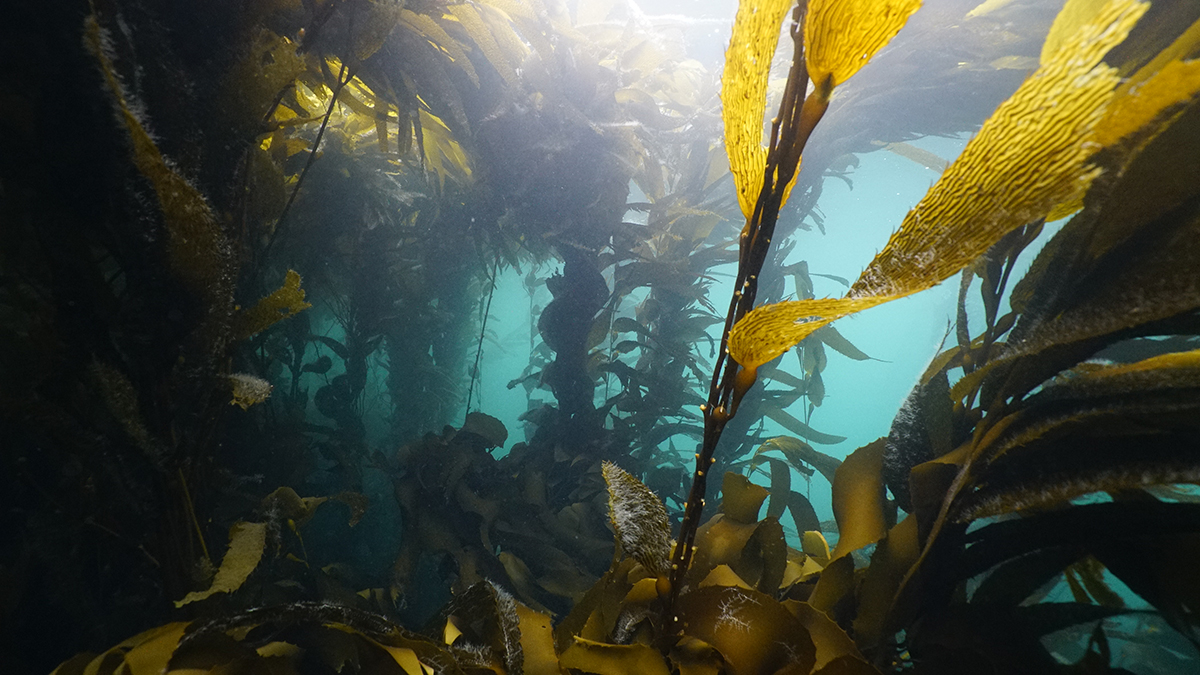
Photo by Mariano Rodriguez

A driving force to curb the worldwide climate emergency and the biodiversity crisis, Tompkins Conservation protects, rewilds, and defends land and marine ecosystems in the Southern Cone through collaborating to create national parks and rewilding key species. Working with public and private partners, the organization has helped to create 13 national parks, protecting 14.5 million acres. The goal is to restore a healthy planet with big, wild, and connected landscapes where animals and plants can thrive. This also means helping to build robust communities that benefit from a healthy natural world.
Kristine McDivitt Tompkins and Douglas Tompkins (1943-2015) founded Tompkins Conservation after leading iconic American clothing brands—Kristine as longtime CEO of Patagonia Inc, and Doug as co-founder of The North Face and Esprit. Changing course in the early 1990s to focus on conservation, they became two of the most successful conservation philanthropists in history. After Doug lost his life in a tragic kayaking accident in 2015, Kristine has continued to build on their foundation. She is now the president of Tompkins Conservation and a UN Environment Patron of Protected Areas.
A 501(c)(3) public charity, Tompkins Conservation carries out conservation projects through the nonprofit network of Rewilding Chile and Rewilding Argentina.