Rewilding Isn’t About Saving Nature. It’s About Letting Go of Control.
May 7, 2026

Photo by Kenyon Fields Photography
Rewilding is often mischaracterized as nostalgia — a sentimental longing for some imagined pre-human wilderness, or a technical conservation strategy dressed up in romance. That framing misses what rewilding actually disrupts. Rewilding isn’t a return. It’s a refusal. A refusal of the extraction-first worldview that treats land as inert matter, animals as units of production, and ecosystems as systems that must be optimized, managed, or corrected. At its core, rewilding asks something culturally uncomfortable: What happens when we stop positioning ourselves as the central intelligence of the landscape?
The language emerging from Rewilding Earth has always resisted tidy environmental binaries. The emphasis on cores, corridors, carnivores, compassion, and coexistence isn’t a checklist or a branding exercise — it’s a challenge to the deeper cultural logic that produced ecological collapse in the first place. Cores are not simply protected spaces; they are places where the fantasy of total human oversight begins to unravel. Corridors expose the absurdity of borders imposed on living systems that have never respected them. Carnivores, in particular, destabilize our stories. Apex predators do more than regulate prey populations; they interrupt the assumption that humans sit safely at the top of every hierarchy.

Photo by Kenyon Fields Photography
Modern conservation culture tends to speak in the language of management — adaptive frameworks, ecosystem services, measurable outputs. Rewilding speaks in a different register. It acknowledges that ecosystems are not machines with replaceable parts, but living relationships shaped by disturbance, uncertainty, and time scales that far exceed human planning cycles. The land does not require constant intervention to function. In many cases, it requires our restraint.
This is not metaphorical. When wolves were reintroduced to Yellowstone, the results were not limited to changes in elk populations. Vegetation patterns shifted. Riverbanks stabilized. Beavers returned. The presence of a predator altered behavior across the entire system, triggering trophic cascades that no human management plan had successfully engineered. The lesson wasn’t that we finally learned how to control the system — it was that the system responded most powerfully when every variable returned.
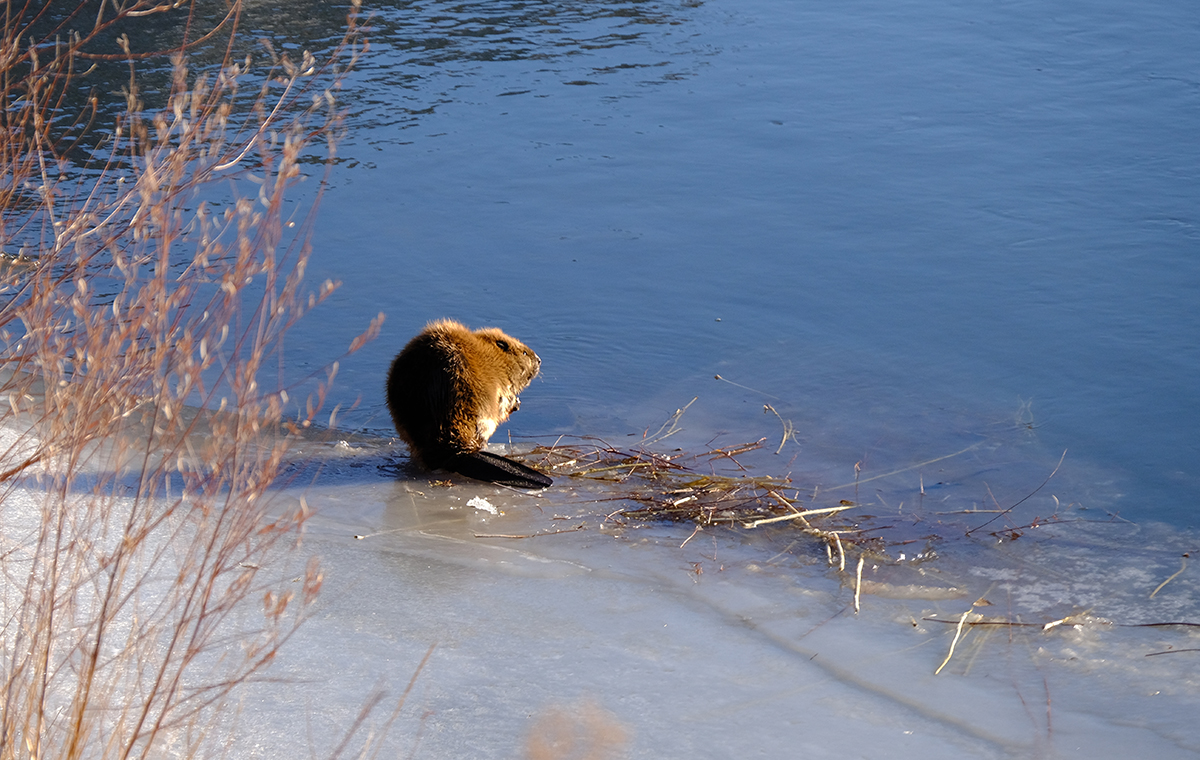
Photo by Kenyon Fields Photography
Similar patterns are emerging in rewilding landscapes worldwide. In parts of Eastern Europe, the reintroduction of large herbivores such as European bison is restoring grassland dynamics, increasing biodiversity, and enhancing carbon storage. These animals are not symbolic gestures or public-relations wins. They are ecological agents, shaping land, cycling nutrients, and performing climate work without human supervision or optimization models.
Where rewilding becomes genuinely disruptive is in how it unsettles cultural assumptions about safety, ownership, and entitlement. Living alongside large carnivores forces communities to renegotiate long-held narratives about risk and dominance. It reveals how deeply fear has been socialized — not only fear of animals, but fear of unpredictability itself. Coexistence efforts show that successful rewilding is not just biological; it is relational. It requires shifts in perception, local knowledge, and shared responsibility rather than the promise of total security.
Photo by Kenyon Fields Photography
From a cultural analysis perspective, rewilding exposes how thoroughly we’ve been trained to value control over relationship. Nature has been framed as something to be made legible, efficient, and useful. Rewilding resists that reduction. It insists that life has agency beyond human intention and value beyond human utility. Meaning, in this framework, is not imposed from above but emerges through interaction, attention, and restraint.
Extended time in intact landscapes makes this unmistakable. Encounters with predators collapse abstraction. You stop thinking in terms of management and start thinking in terms of presence. The land communicates through patterns, absences, tracks, and silence. You don’t impose order; you learn to read what is already happening. Control gives way to participation.

Photo by Kenyon Fields Photography
For those looking to engage beyond theory, rewilding offers tangible entry points: supporting wildlife corridors, participating in citizen science, advocating for Indigenous land stewardship, and resisting development that fragments ecosystems. These actions matter not because they are performative, but because they align culture with ecology. Rewilding does not ask everyone to withdraw from society. It asks us to reconsider the stories we’ve inherited about land, ownership, and human centrality.
Rewilding is not about erasing humans from the landscape. It is about relinquishing the fantasy that we stand outside it. In a time marked by ecological collapse and cultural fragmentation, rewilding offers something rare — not a solution to be implemented, but a relationship to be repaired. And that repair begins not with control, but with listening.
Photo by Kenyon Fields Photography

Jordan Bridger is a CEO, cultural analyst, and social psychologist. He has worked with the United Nations, film companies, medical frontliners, and other notable organizations. He is also an established rock climber and outdoor survivalist.