
The Oostvaardersplassen: A Moral Grey(lag) Zone?
April 23, 2026
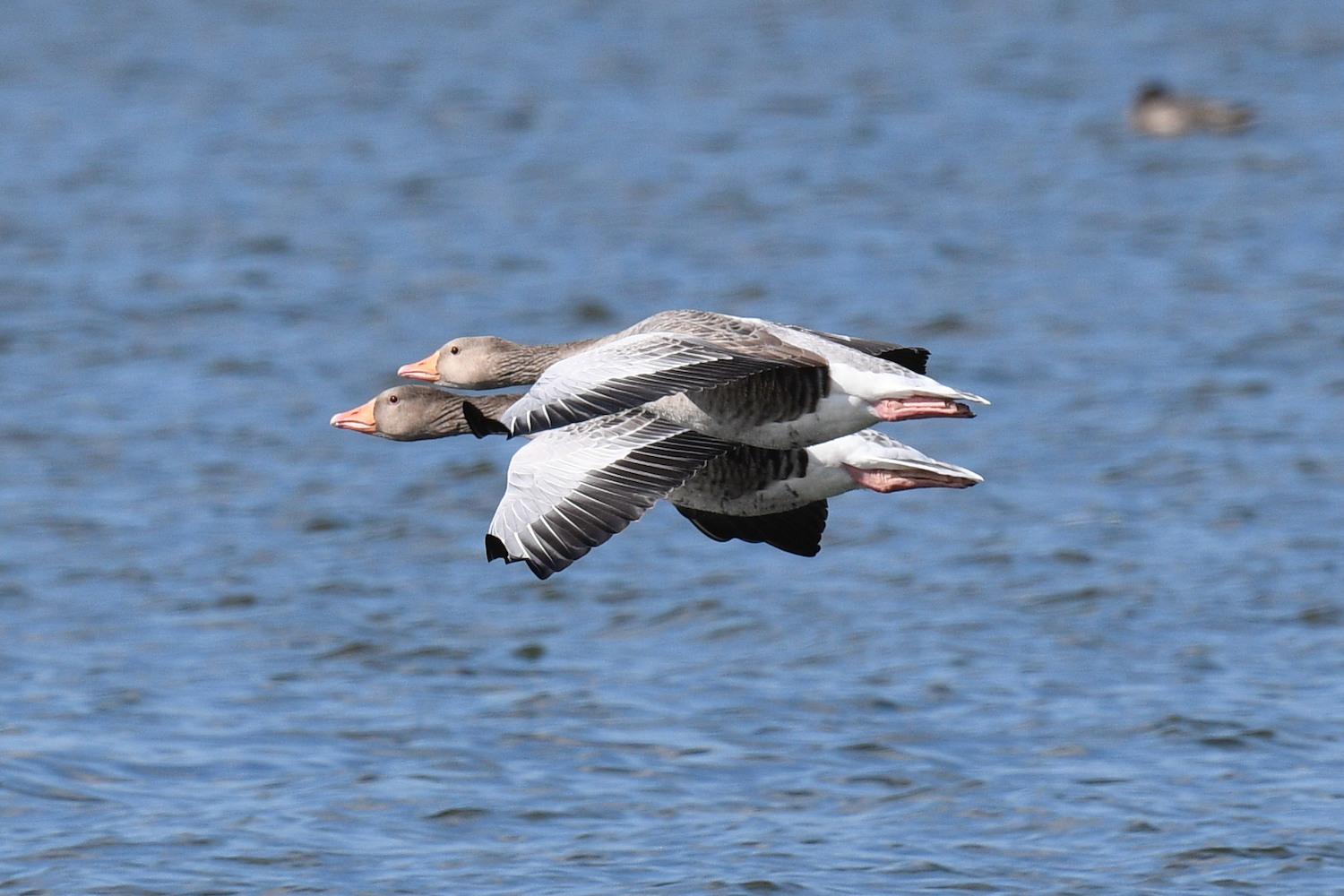
Greylag geese in flight (Netherlands) by Kate McFarland
The release of large herbivores into the Oostvaardersplassen, a 22-square-mile polder in the Netherlands, was one of Europe’s most controversial projects to bear the “rewilding” label. It is hard to distill the case’s ethical complexities into a short article, but I want to highlight one consideration that is sometimes obscured in the debate: It is not only the grazers but also the birds who found a refuge in the Oostvaardersplassen who deserve moral consideration. [1]
In one respect, the Oostvaardersplassen was like Surtsey, the young volcanic island discussed in my last post for Rewilding Earth: It began as a piece of land newly emerged from the sea in the 1960s — albeit in the typical Dutch fashion of land reclamation. For a time, the Oostvaardersplassen was also a place where ecological processes were largely allowed to take their own course, without human intervention. This resulted in the emergence of a thriving wetland ecosystem, which was particularly notable as a molting site for tens of thousands of greylag geese, in addition to a breeding site for little egrets, little bitterns, and common spoonbills.
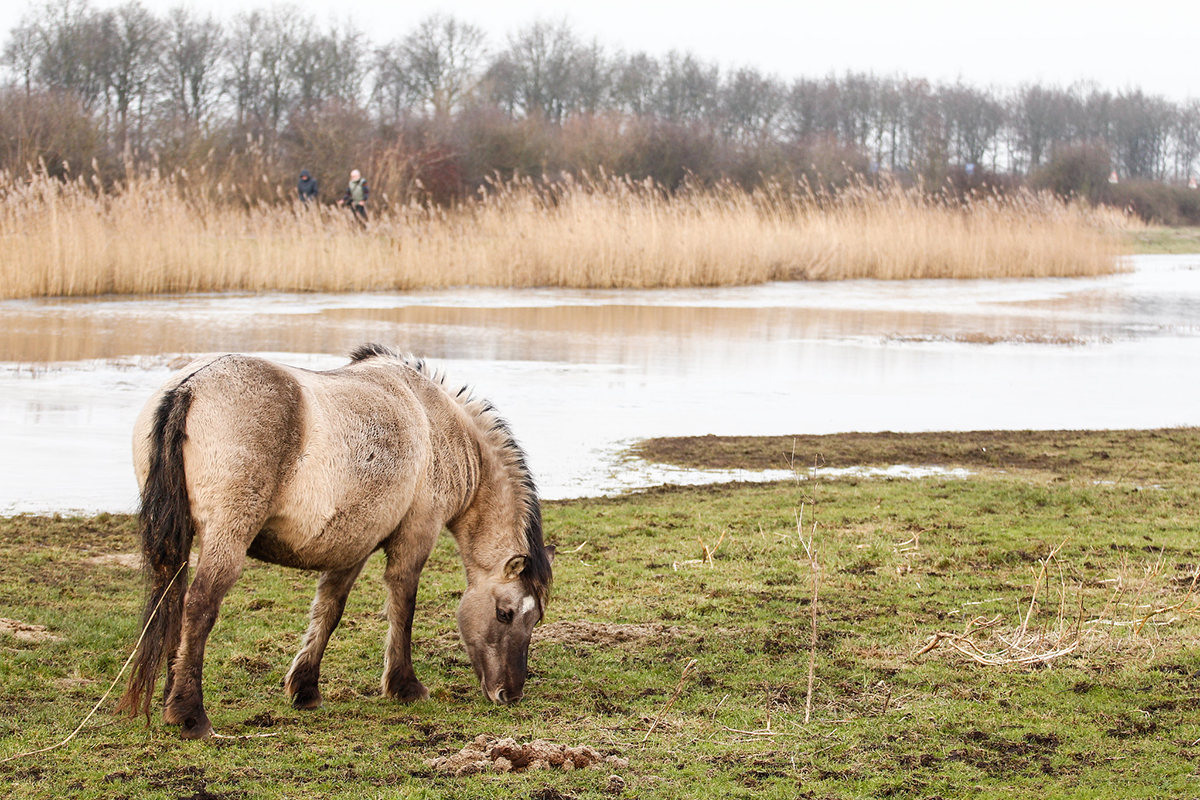
Beginning in the early 1980s, the management of the Oostvaardersplassen took a different course. In order to protect this newly important habitat for greylag geese and other birds, conservationists wanted to prevent the polder from developing into woodland. Ultimately, at the behest of biologist Frans Vera, Konik ponies and Heck cattle were released to live “wildly” on the polder. Vera’s hypothesis was that the natural activity of these large grazers would keep the landscape open in the absence of agriculture. As reported in a recent BBC feature on the Oostvaardersplassen, Vera was responding to the “traditional view” that grazing cattle were needed to prevent woodland from developing and that, further, “If you want to have cows, you need to have farmers.” On his own telling, “That led me to an idea: If domesticated cows can maintain pasture, then surely wild cows could do the same?”
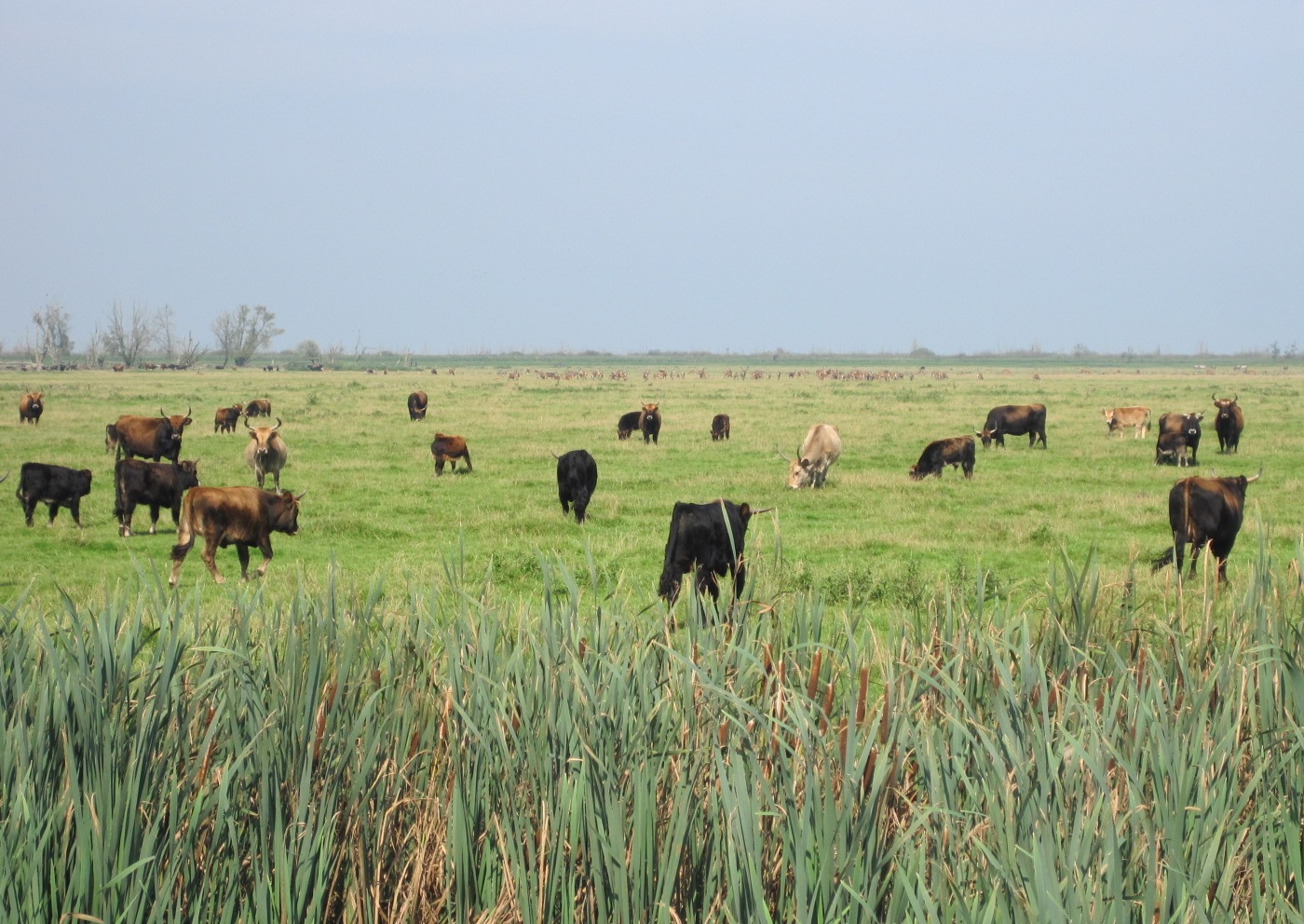
Heck cattle at Oostvaardersplassen, red deer in the background by Peter Galvin / Wiki
In that conjecture, Vera was right — infamously. To the public’s dismay, the “rewilded” horses and cattle did more than prevent succession to forest: Their populations expanded until they effectively ate themselves to starvation too. With no predators to control their numbers or behavior, they overgrazed the wetland vegetation, and smaller mammals and birds — including some of the reserve’s rare species — also began to disappear. Eventually, in the wake of protests, site managers adopted a more interventionist approach: culling the grazers to keep their population sizes in check and protecting areas of vegetation with fences. This outcome has led the Oostvaardersplassen to be regarded as a failed experiment in rewilding.
Should “rewilding” ever have been attempted in the Oostvaardersplassen? Perhaps it is the wrong question to ask. As David Schwartz remarked in a guarded defense of the project for Rewilding Earth, “It’s hard to ‘rewild’ a polder of land that didn’t even exist until 1968.”
We could say something similar about Surtsey. The question about Surtsey was never whether to “rewild” it, but whether to allow colonization and succession to follow its own course with no contributions from humans — including the deliberate introduction of species selected by us. It might be tempting, especially with the benefit of hindsight, to say that a similar hands-off approach would have been better for the Oostvaardersplassen. Indeed, Helen Kopnina, Simon Leadbeater, and Paul Cryer concluded their compassion-based critique of Vera’s experiment with such a recommendation: “A non-interventionist approach would be more successful if OVP was left to smaller animals and birds, granting great cormorants, egrets, common spoonbills, and white-tailed eagles a large human-free refuge.” [2]
What this position overlooks is the pragmatic rationale for introducing large grazers into the landscape: With no intervention to prevent succession to forest, many of those smaller animals and birds would have eventually lost their habitat. It is important not to confound Vera’s theoretical interest in testing his “wood pasture hypothesis” with the more widely accepted practical goal of preserving habitat for greylag geese and other wetland birds.
Some of us might be inclined to dismiss worries about encroaching vegetation even in view of that pragmatic rationale. We might think that it’s not for us to judge that greylag geese should be prioritized over forest species, and that we should stand back and let nature decide.
That was once my view, but I am no longer so sure. As the Rush lyric goes, “If you choose not to decide, you still have made a choice.” If land managers had left the Oostvaardersplassen alone in an attempt not to “decide for nature,” they would have knowingly chosen to allow many wild birds to lose their molting or breeding habitat. Moreover, when one considers that human activity has destroyed more than 75 percent of the Netherlands’ wetlands since 1700, one might even think that there was an obligation to protect this habitat.
Furthermore, it is surely not always objectionable to intervene to halt succession for the sake of conserving specific types of habitats or protecting specific species that depend on them.
Even in my home of Columbus, Ohio, it was very common to employ practices like mowing and prescribed burns to maintain prairies and meadows and their associated biodiversity. It was simply not called “rewilding” and didn’t involve large grazers, making it easy to acknowledge the importance of conserving early successional habitat at the same time as taking for granted that domesticated grazers like horses and cattle should neither be farmed nor “rewilded.”
It is important to consider the welfare of the introduced horses and cows when critiquing projects like the Oostvaardersplassen, but it is also essential to remain mindful of the broader context: Conservation grazing is a widely accepted management strategy in Europe, where much wildlife depends on early successional habitats (not unlike in North America). Whether they are “natural” or culturally created, Europe’s grasslands have come to host diverse wild animals and plants. In recent decades, however, populations of open landscape species such as meadow birds have been declining precipitously due to the intensification of agriculture — with particularly severe declines in the Netherlands. If we are to inject compassion into conservation, we must not limit that compassion to large mammals while forgetting that Europe’s beleaguered marshland birds and meadow birds also have interests that matter.
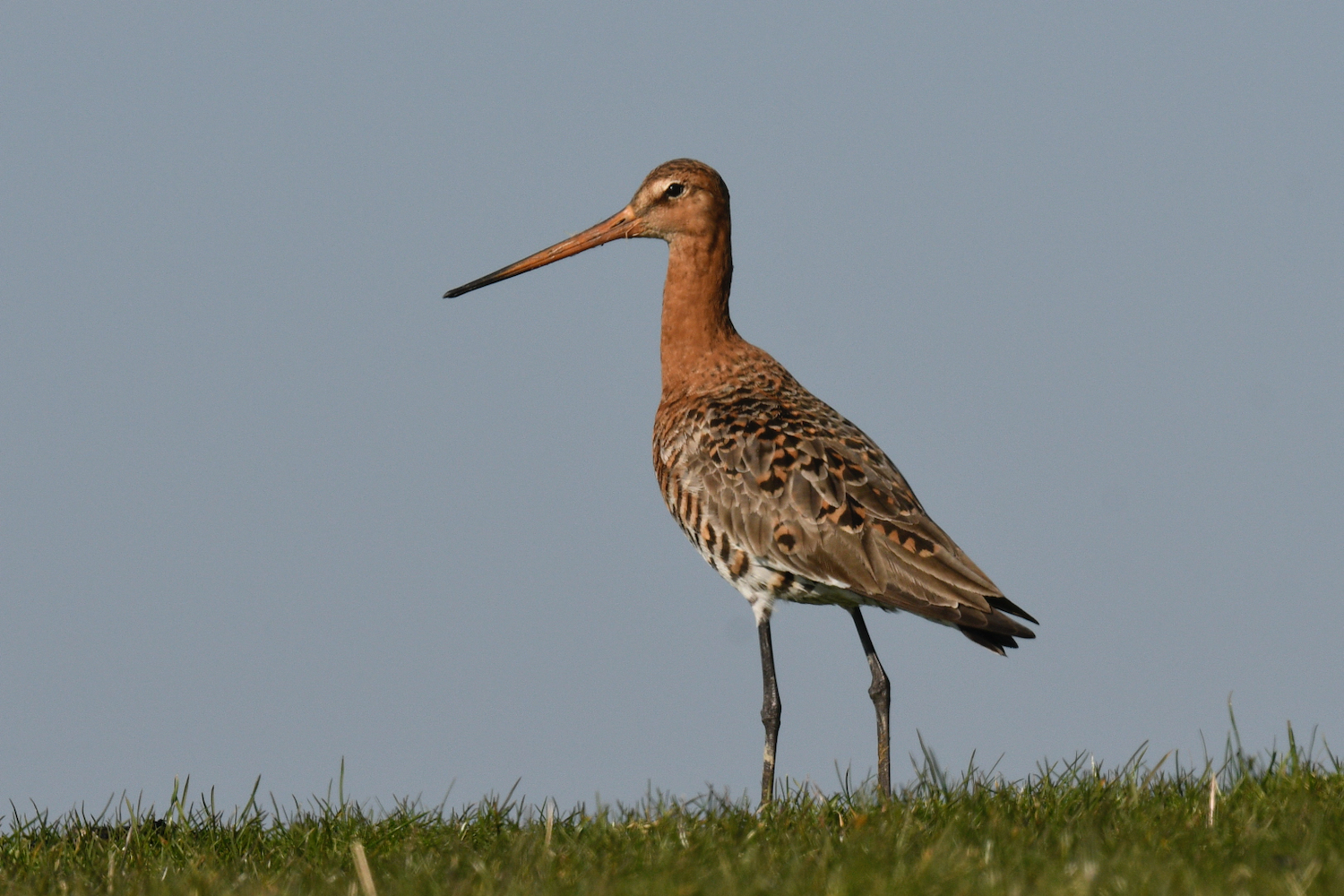
Grutto (emblatic Dutch meadow bird) by Kate McFarland
In a previous article in Rewilding Earth, I encouraged rewilders not to forget about migratory birds when calling for corridors and connectivity. In this context, it is important to acknowledge that intervention is sometimes necessary to protect suitable habitat along a bird’s migratory range. This holds in North America too. Kirtland’s warblers, for example, might have met their extinction without intervention to create and maintain young jack pine habitat in their breeding territory in Michigan. “Letting things be” is not a silver bullet.
[1] For present purposes, I have set aside the semantic question of whether it is misleading to refer to the Oostvaardersplassen experiment as “rewilding” and the more substantive background question of whether the polder ought to have been created in the first place. The praise bestowed upon the Oostvaardersplassen as a mecca for birdlife is somewhat ironic, considering that the land was created as part of the Zuiderzee Works — an extensive civil engineering project that involved the damming of the Zuiderzee bay and its conversion to a freshwater lake, resulting in the loss of coastal marine ecosystems and possibly the local extinction of two shorebird species. [2] This quote is from “Learning to Rewild: Examining the Failed Case of the Dutch ‘New Wilderness’ Oostvaardersplassen” (December 2019, International Journal of Wilderness). See also the same authors’ related article “The golden rules of rewilding — examining the case of Oostvaardersplassen” (December 2019, ECOS 40), which concludes with a similar claim.
Kate McFarland is a former board member of The Rewilding Institute. Her rewilding-related interests subsequently settled on feathered fauna and flyway conservation, with accompanying interests in noise and light pollution mitigation, as well as non-anthropocentric conservation ethics.