
Episode 175: How Bedrock Environmental Laws Are Holding the Line in Alaska (For Now) with Cooper Freeman
May 29, 2026
Podcast: Play in new window | Download | Embed
Subscribe to Rewilding Earth Podcast: Apple Podcasts | Spotify | Amazon Music | iHeartRadio | Email | Youtube Music | RSS | More
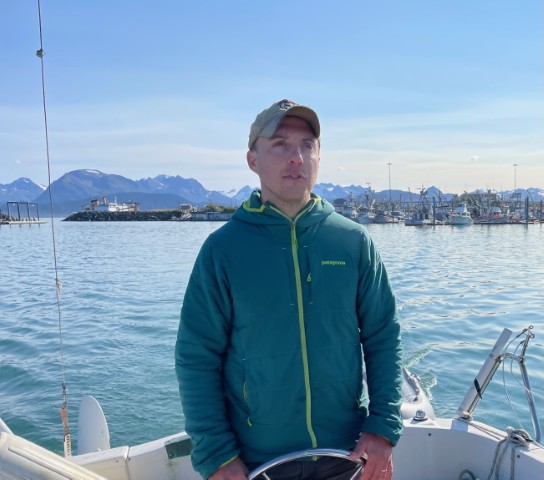
Cooper Freeman, Alaska director, Center for Biological Diversity
Episode Summary
Cooper Freeman, Alaska director for the Center for Biological Diversity, returns to the Rewilding Earth podcast and joins host Jack Humphrey for a transparent, gritty, and surprisingly hopeful update from the frontlines of Alaskan conservation. Navigating a relentless onslaught of fast-tracked industrial projects and regulatory procedures gutted under the current administration, Cooper outlines how conservationists in Alaska are successfully using bedrock environmental laws to keep major ecological harm at bay.
While the threats in Alaska — ranging from a gold mine haul road cutting through Lake Clark National Park and Preserve to massive bottom-trawling fleets in the Bering Sea — are unprecedented, this episode of the podcast centers on a message of fierce defiance. By viewing this defensive era as a crucible that is sharpening the movement’s strategic muscles, Cooper and Jack remind listeners that, despite the dystopian headlines, the rule of law is holding. And the conservation movement is building the stamina to launch a historic offensive when the political tide turns.
Key Talking Points
The Dystopian State of Play in Alaska
- Warp Speed Deregulation: Traditional 60- to 90-day public comment windows and thorough environmental impact statements are being bypassed in favor of fast-tracked approvals done in the dead of night.
- “Critical Metals” Loophole: By leveraging day-one executive orders on energy crises, the administration is labeling standard gold projects — like the proposed Johnson Tract Mine near Lake Clark National Park and Preserve — as “national emergencies.” This allows them to strip away public notice and give Tribes only seven days to comment on cultural resource impacts.
- Impending Summer Test: While actual, on-the-ground destruction has been successfully held at bay for the last year and a half, the movement is entering a critical testing phase as the ground thaws and the summer construction season begins.
Sand in the Crankcase (the Wins)
- Headline vs. Reality Gap: Despite aggressive rhetoric from officials like Interior Secretary Doug Burgum about an “Alaska Renaissance,” the actual destructive output remains zero at major flashpoints. There are still no drilled wells in the Arctic Refuge, no miles built on the Ambler or Izembek roads, and no old-growth clearcuts in the Tongass.
- Ninth Circuit Victory: The Center for Biological Diversity recently won a massive victory safeguarding 160 million acres of marine habitat for Arctic ice seals. When the administration refused to defend its own critical habitat designation against a lawsuit by the State of Alaska, the Center intervened and successfully defended the science.
- Economic Realities: Many of these massive extractive projects are “loss leaders” that do not make sense in today’s economic environment. They only survive on paper for billionaires and asset management companies, making them highly vulnerable to delays.
Transitioning from Defense to Strategic Offense
- Playing the Long Game: Cooper uses the allegory of a river guide or a highly strategic defense force, knowing when to deploy a quick-strike team to throw sand in the gears and when to dig in for a four-year litigation trench war.
- Northern Fur Seal Lawsuit: Proving they can walk and chew gum at the same time, the Center for Biological Diversity has launched a creative, offensive lawsuit using the legacy Northern Fur Seal Act and the Marine Mammal Protection Act. The goal is to establish strict area restrictions against the massive, billion-dollar industrial pollock trawl fleet to protect nursing mothers in the Bering Sea.
- Day-Zero Readiness: The ultimate goal of surviving this “woodshed” period is to ensure the movement comes out in the best shape of its life. Conservationists must be organized, fully funded, and ready on “Day Zero” of a friendly administration to not just rebuild, but aggressively expand wilderness designations and recover species.
Remaining Human in the Fight
- An Antidote to Despair: With an endless task list that regenerates daily, Cooper notes that there simply isn’t time to sit back and despair. The work itself, alongside the community’s solidarity, provides the momentum.
- Resilience of Gaia: Rewilding experiences in the Lower 48, such as wolves expanding their territory and jaguars appearing in the Southwest, prove that if we simply take our foot off nature’s neck, life possesses an incredible, stubborn drive to heal and return.
Extra Credit
- Keep up with Cooper and the Center’s battles in Alaska.
- Join the Center for Biological Diversity’s mailing list to stay up-to-date on conservation battles across the country.
- Listen to Cooper’s first Rewilding Earth podcast appearance: “Fighting Back: Alaska’s Stand Against Trump’s Environmental Blitzkrieg.”

Director of Digital Outreach (D.O.D.O.) for The Rewilding Institute
Host and Producer of the Rewilding Earth Podcast
Jack started Rewilding work as Executive Director of Sky Island Alliance in the mid-1990’s, organizing the Sky Island Wildlands Network design, ripping up illegal roads on forest service lands, installing wolf acclimatization pens on Ted Turner’s Ladder Ranch & conducting howling surveys to help make way for the final stage of the Lobo reintroduction program in the Southwest.
Through the years, Jack has worked with Dave Foreman and the Rewilding Gang to further Rewilding initiatives and education.
